


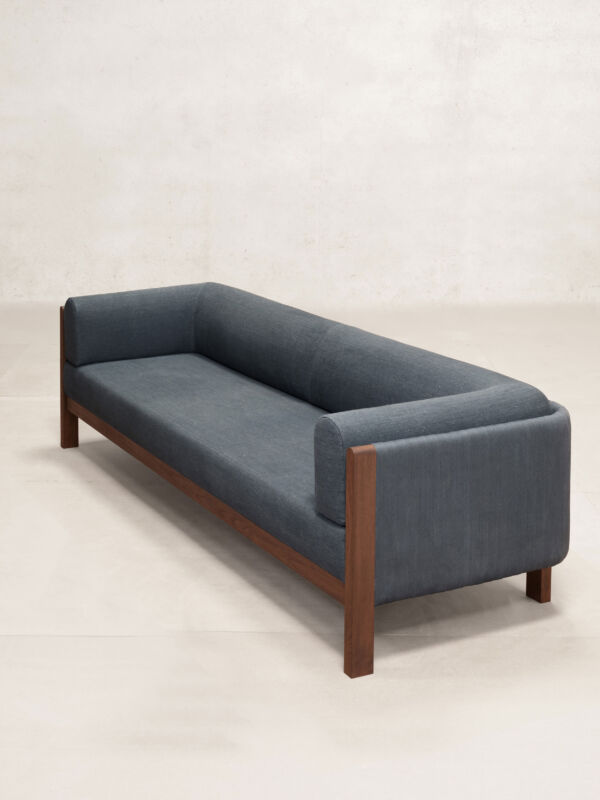
No. 11 Sofa (Zanav Upholstery) |
||||||||
|
||||||||
| How to buy | ||||||||
| Enquire |
Product Description
As alternatives to the checked upholstery and cushion fabrics of the original No. 11 Sofa seen in Geoffrey Bawa’s Colombo home, Phantom Hands worked with Bengaluru-based textile studio Zanav to develop a more adaptive capsule of understated neutrals. The challenge was balancing two distinct objectives: to create a fabric collection that felt contemporary and restrained, and simultaneously evoked Bawa’s signature sensibility. “It was quite a tricky proposition,” says Aparna Rao, co-founder of Phantom Hands.
The process began with a brief to Zanav’s founder Ravi Khemka, whose first move was to conduct a study on Barefoot—the Sri Lankan textile company that made the fabrics Bawa used. Khemka then selected from within Zanav’s archives, textiles that technically and materially recalled the Barefoot ones. The result of that extensive search was a plain weave from a fabric family that went by the name ‘Radhanagar’. Barefoot’s original fabric was woven in cotton—a choice shaped by the materials available in Sri Lanka at the time. Zanav’s Radhanagar added a layer of textural complexity to that foundation by using a blend of cotton and linen yarn.
Khemka’s aesthetic leans strongly towards minimalism, so when it came to adding a contemporary accent to the selection, he chose the Wimberlygunj—a striped fabric designed by Belgian textile designer Fabienne Collet, and woven on heritage looms. Collet had drawn from the Bauhausian tradition of geometric textile design to create these, and Rao recognised that the stripes of the Wimberlygunj echoed the ones on the original No.11 sofa’s medium cushions. Khemka concurred, with the understanding that upgrading the original patchwork cushion required a different approach. “The idea was to elevate value by interpreting the fabric in a way that recalled the original’s iconic stripes, but used materials and techniques that had moved with the times,” he says.
What most clearly sets Zanav’s fabrics apart though, is the open-air vat-dyeing process used for its yarn. The dyeing facility used by Zanav is one of the last few places still practicing this manual dyeing method, in which the yarn is submerged in large vats of water mixed with insoluble dye and a reducing agent. The yarn is then pulled out and dried until the dye oxidises and develops as colour. Because the ‘airing’ process relies on atmospheric oxygen, the oxidation is not a uniform process and no two hanks of vat-dyed yarn are identical. The colour carries a depth and irregularity that mechanical dyeing cannot replicate.
Once the fabrics were selected, Rao narrowed the palette down to five colours for the Radhanagar, and three for the Wimberlygunj. The palette as it stands has been judiciously edited so that any combination of colours drawn from across the two fabric families will work well together. Both fabric types in these combinations share the same plain-weave structure as the Barefoot fabrics used in Bawa’s original sofa, but the addition of linen, and the characteristic richness of vat-dyed yarns contemporises them for present-day spaces.
Product Specification


Product Options
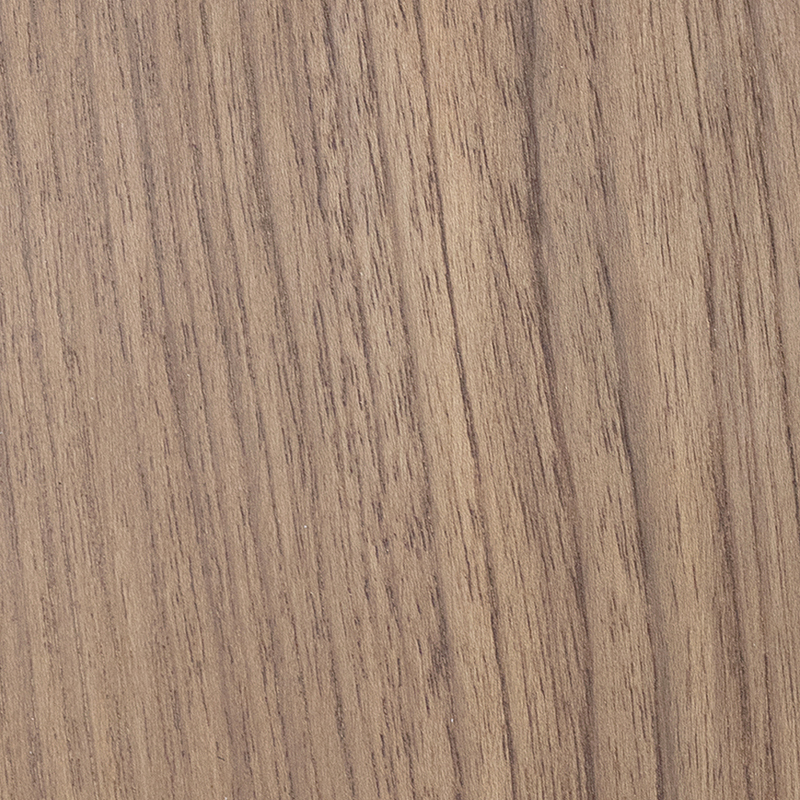
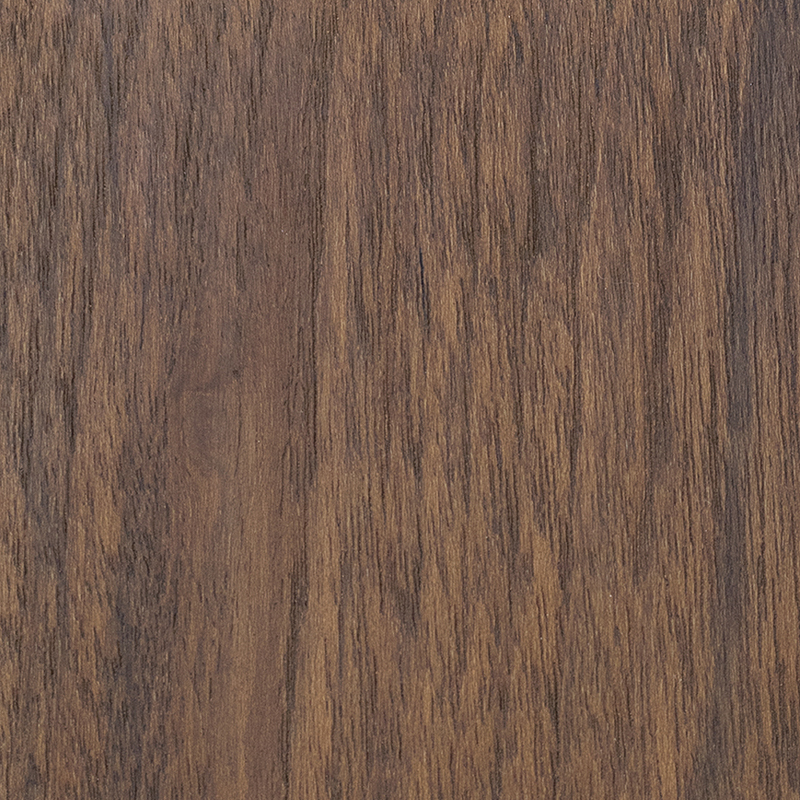
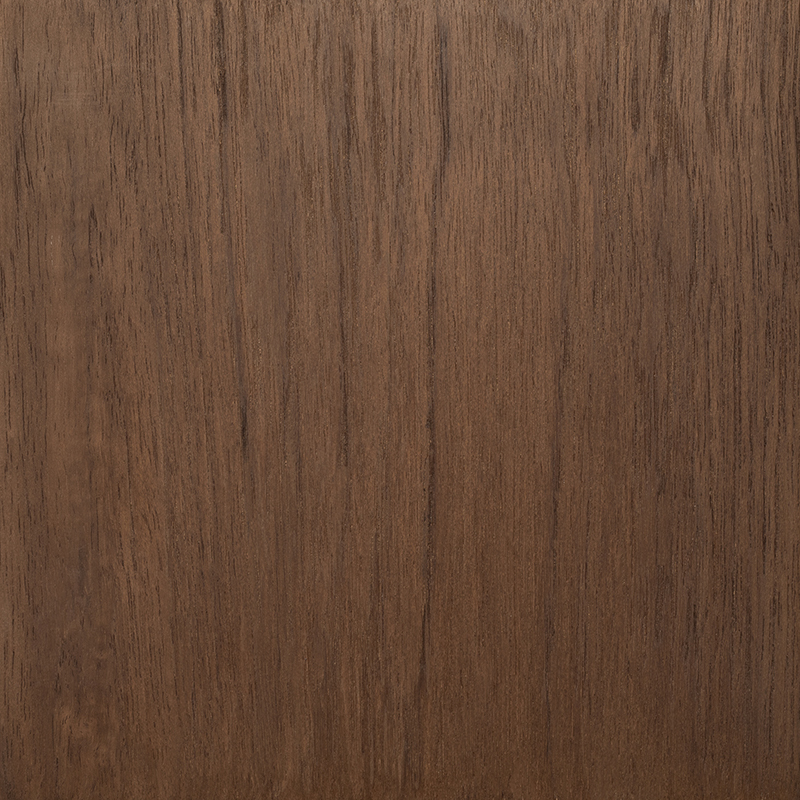
We offer this piece in three finishes: Natural Teak and Dark Stain as standard finishes, and Y4 Light Walnut as a premium finish.
All three finishes begin with hand-sanding the wood with progressively finer grits of sandpaper. The Natural Teak is then finished with a hard wax oil that brings out the wood’s golden-brown colour. The Dark Stain and Y4 Light Walnut, with the latter being a proprietary shade, both receive a waterborne stain, followed by three coats of compatibility-tested hydro-oil.
The three colourways seen in the images above are as follow:
Combination 1:
Seat, backrest, and large back cushions in Radhanagar Moon Beam
Small cushions in Radhanagar Atmosphere
Striped cushion in Wimberlygunj White sand
Combination 2:
Seat, backrest, and large back cushions in Radhanagar Atmosphere
Small cushions in Radhanagar Falcon
Striped cushion in Wimberlygunj Dove
Combination 3:
Seat, backrest, and large back cushions in Radhanagar Brushed Nickel
Small cushions in Radhanagar Falcon
Striped cushion in Wimberlygunj Peat
Wood Finish Options - Natural Teak (Teak) / Dark Stain (Teak) / Y4 Light Walnut (Teak)
Cushion Fabrics - Wimberlygunj White Sand / Wimberlygunj Dove / Wimberlygunj Peat


Upholstery Options - Radhanagar


Related Products
See More
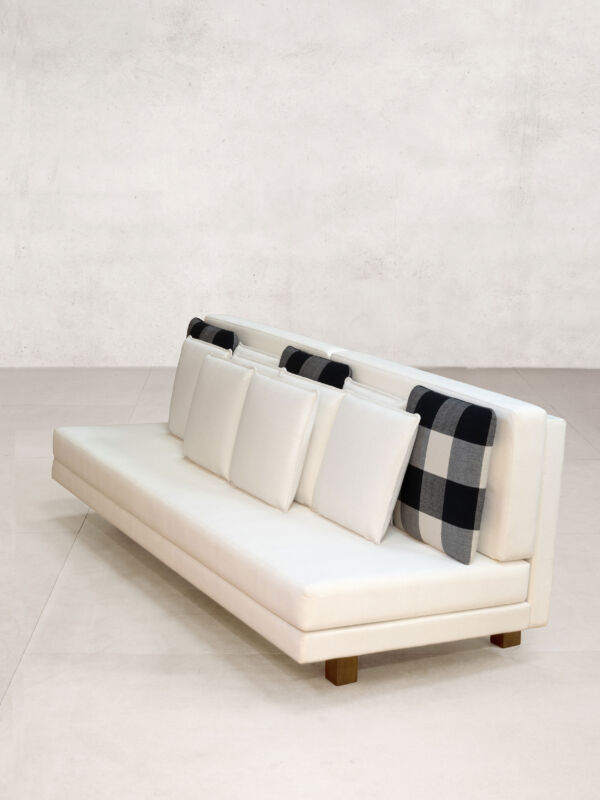

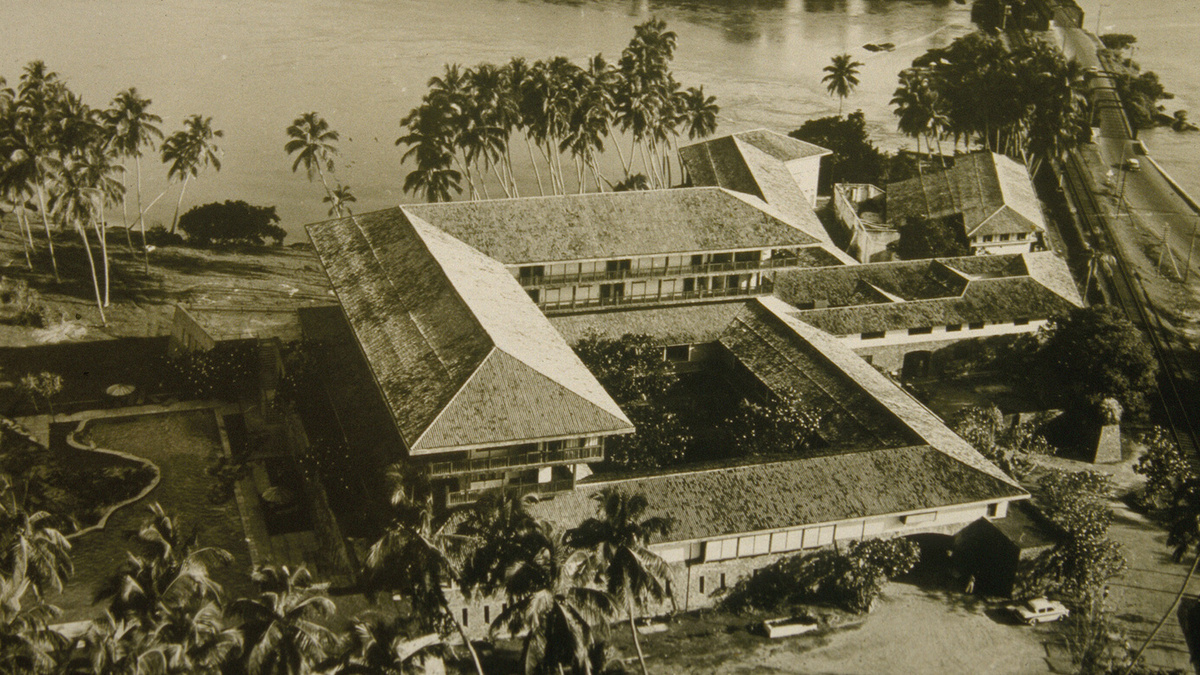
Geoffrey Bawa’s Design Legacy: How Sri Lanka’s Modernist Pioneer Shaped Furniture, Interiors, and Hospitality in South Asia
In post-independence Sri Lanka, Geoffrey Bawa redefined what modern design could mean in a newly self-determining nation. Working within economic restrictions and social upheaval, he created architecture and furniture that reflected both resourcefulness and restraint — work that continues to shape the region’s design language today.
Read More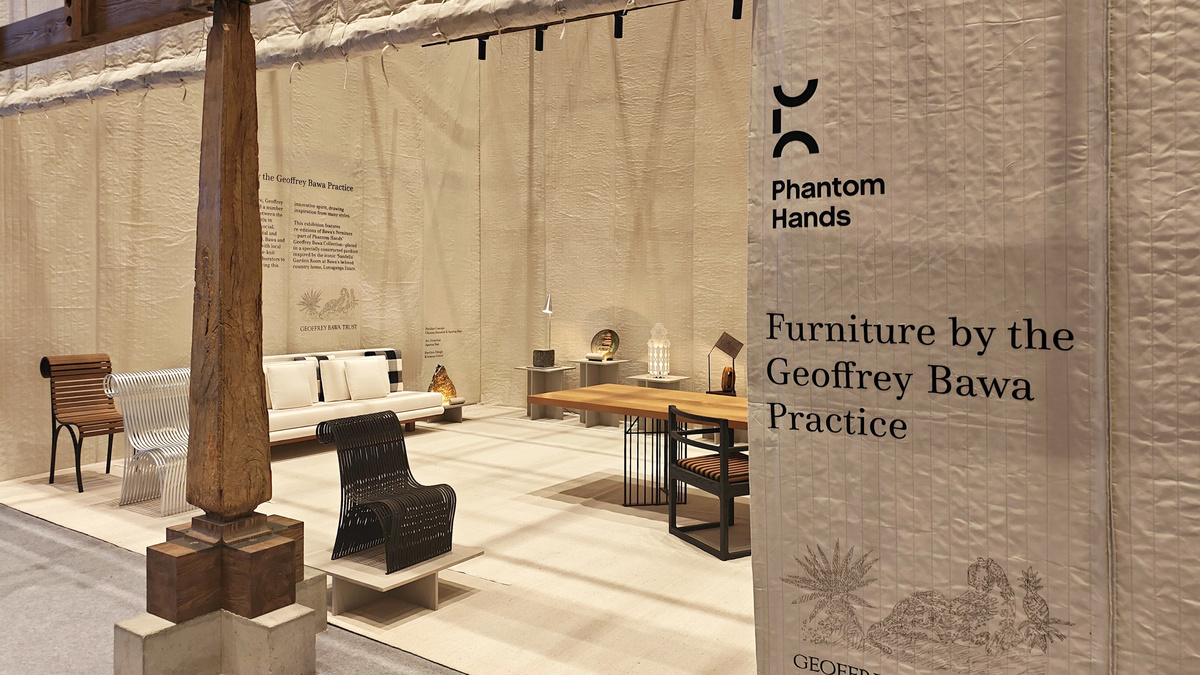
A Quiet Place: Phantom Hands & the Geoffrey Bawa Trust Reimagine Lunuganga at the 2025 AD Design Show
For Phantom Hands, whose practice has consistently engaged with modernism in South Asia, staging the Bawa Pavilion at the 2025 AD Design Show marked an evolution from maker to interlocutor. In the act of translating Lunuganga’s thoughtful beauty for an entirely different context, new meanings surfaced, and new resonances emerged.