Geoffrey Bawa’s Design Legacy: How Sri Lanka’s Modernist Pioneer Shaped Furniture, Interiors, and Hospitality in South Asia
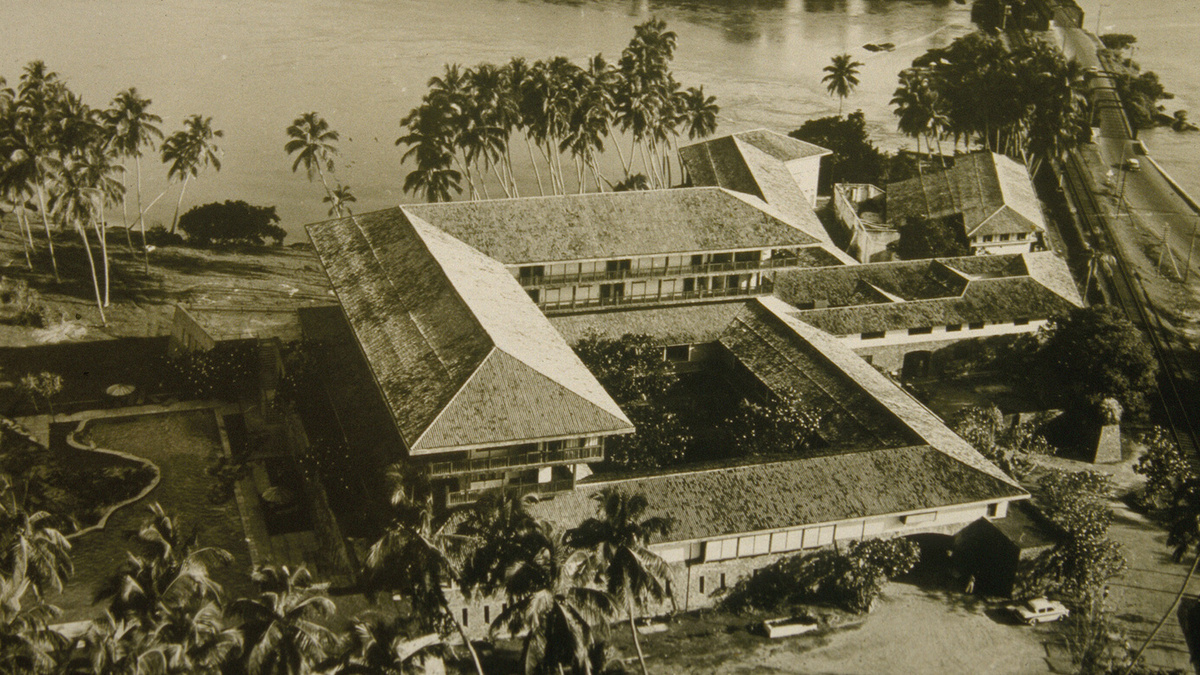
Aerial View of Bentota Beach Hotel, © Geoffrey Bawa and Lunuganga Trusts
Parni Ray
20.03.2026
In post-independence Sri Lanka, Geoffrey Bawa redefined what modern design could mean in a newly self-determining nation. Working within economic restrictions and social upheaval, he created architecture and furniture that reflected both resourcefulness and restraint — work that continues to shape the region’s design language today.
It Began in Bentota
With its golden sands and turquoise waters, the town of Bentota on the southwest coast of Sri Lanka has long been a favourite with travellers. In the late 1960’s, just over a decade after Sri Lanka gained independence, the country’s new tourism board designated it as its first "National Holiday Resort”. Geoffrey Manning Bawa, as one of the country’s most significant architectural voices, was called in to help plan it. Over the next few years, Bawa would design a shopping village, a town square, and two of the four planned hotels—the iconic Bentota Beach and the Serendib (now Avani)—in the area.
His own country home, Lunuganga—an erstwhile rubber estate that he had purchased in his late 20s—was close by. The purchase of Lunuganga played a pivotal role in Bawa's transformation from a lawyer to an architect. His ambitious plans of transforming the estate were stalled by his lack of technical knowledge of design. Undeterred, he took up an apprenticeship at the Colombo based architectural firm Messrs. Edwards, Reid and Begg (ER&B), leaving within a year to enrol himself at the Architectural Association in London. When he returned as a qualified architect, he took over what remained of Reid’s practice. He was 38 years old.
In his absence, Sri Lanka had changed—a country now marked by social upheaval, political insecurity, and financial instability. Policies put in place by changing political parties to protect local industry and safeguard the country’s depleted foreign exchange reserves led to a ban on the import of foreign architectural and building materials. But it was these restrictions—part of a broader wave of economic sanctions—that shaped Bawa’s creative choices as an architect, forcing him to make the most of what was available. What initially appeared an impediment proved to be an opportunity, encouraging him to push boundaries and experiment, especially with traditional craftsmanship, local materials, and familiar designs.
“This inventive response to state regulations shaped his furniture making over the next three decades".
The Bentota Beach Blueprint
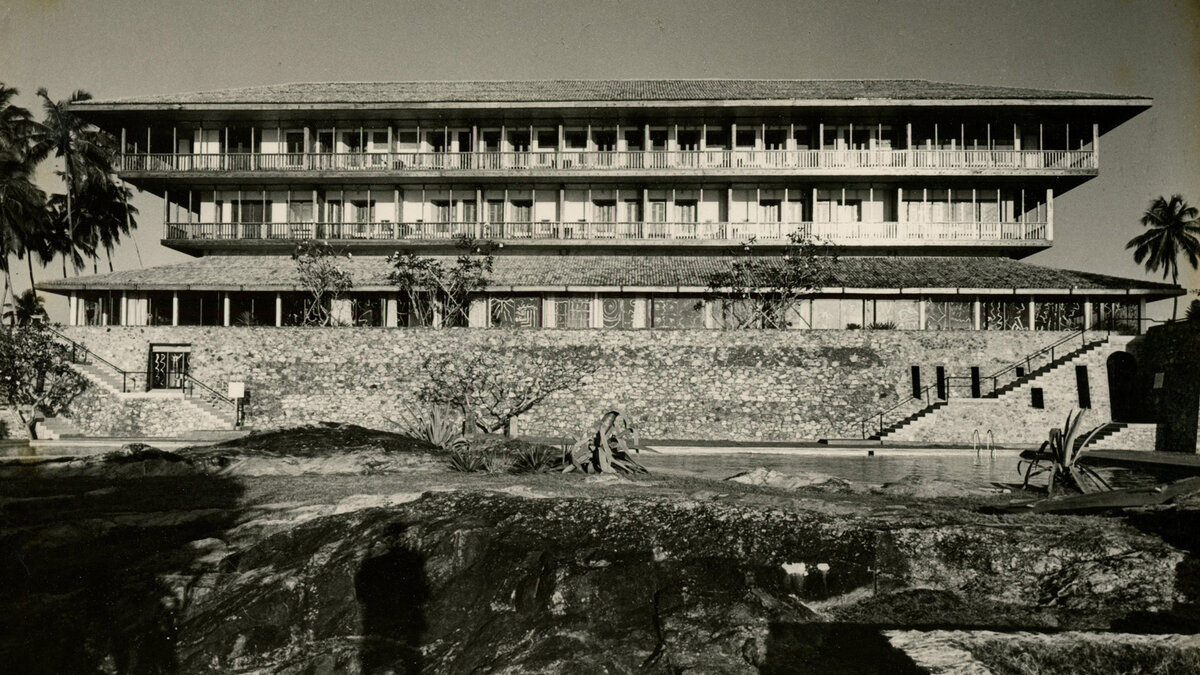
The Bentota Beach Hotel was both a testing ground and testament to this inventiveness. Set on a sandbank between the Indian Ocean and the Benthara River, the hotel’s seamless integration with its surroundings set a new standard for hotel design across South and Southeast Asia. Aside from its architecture, what set it apart was its comprehensive design. Every aesthetic element on the premises was meticulously chosen by Bawa.
‘Geoffrey was loath to have any outsider working in the interior of his architectural projects’, wrote Ismeth Raheem, one of Bawa’s early proteges. For the project, Bawa had gathered a small group of colleagues, artist friends, and craftspeople. It was a way of working—with a sense of continuous collaboration—that would come to characterise his design and his practice over the years.
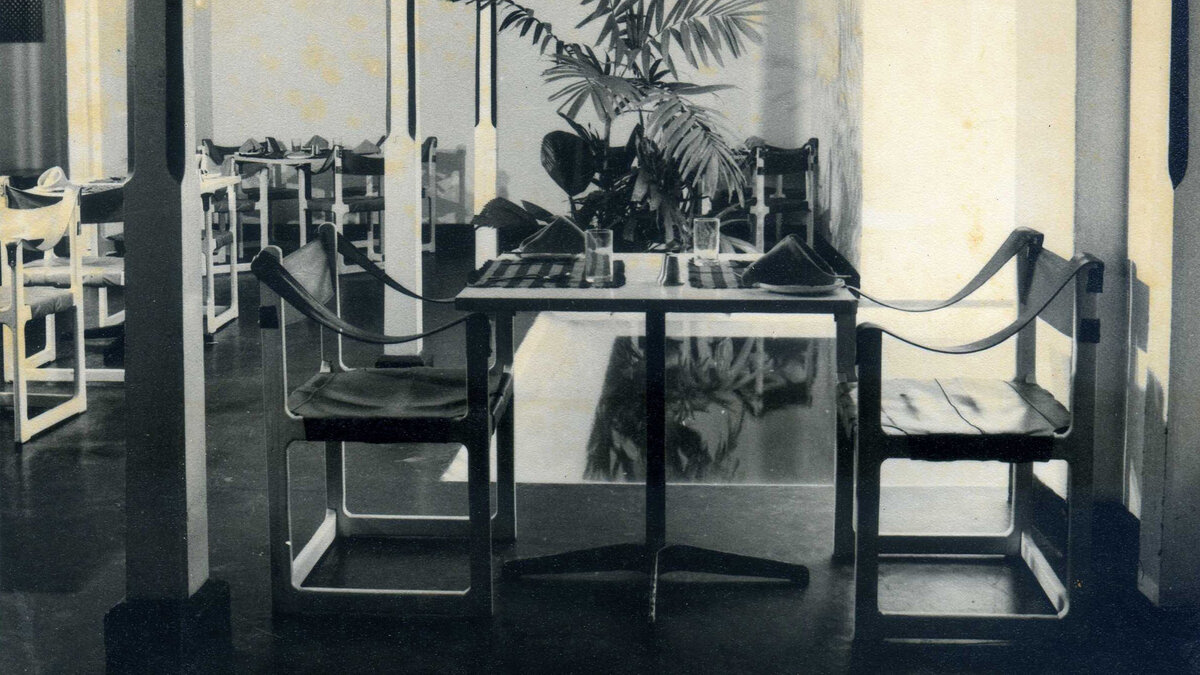
Bawa designed much of the hotel’s furniture, for a number of reasons. He wanted a sense of unity in its spaces; the hotel had a tight budget; local furniture manufacturing wasn’t up to standard; and importing pieces (an option Bawa might have preferred) was out of the question due to government sanctions. His design for the chair used in the hotel lobby and lounge is perhaps the best example of his approach. Taking inspiration from the colonial-era classic veranda armchair—known as the hansi putuwa in Sri Lanka, or the planter’s chair in India—his interpretation removed its armrests, preserving its relaxed, cooling effect while encouraging more interaction between those seated.
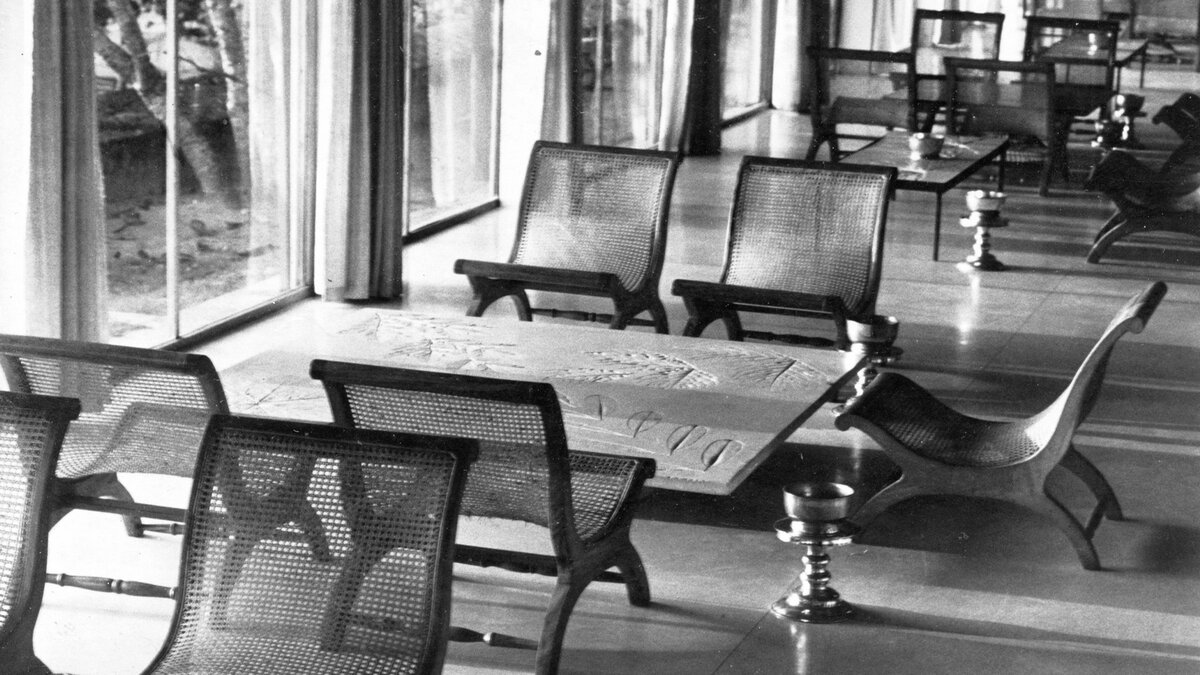
The chairs have since become a Sri Lankan design classic, reimagined over the years in different forms—including a slatted outdoor version. Bawa also designed the dining chairs for the hotel. Sleek and straight-framed, they were finished in glossy black and upholstered with cotton from the Barefoot textile company, founded by his close friend, Barbara Sansoni. They stayed in use right up until a refurbishment in the 1990s.
This all-encompassing approach, where Bawa carefully orchestrated every visual detail of a space—from furniture, to decor, to art and even the outfits for the staff—would go on to define all his future projects. In many ways, Bentota became the blueprint for everything that followed.
A core group of collaborators stayed with Bawa throughout his career, while others came and went. “There were always interns from around the world—British lads, people from Scandinavia, some from India,” said Channa Daswatte, who joined Bawa’s practice in 1991 and was the last partner of the firm.
Objects That Enhance Architecture—The Legacy of Bawa’s Interiors
Traveling wasn’t exactly encouraged in Sri Lanka under a socialist government in the 1960’s and 70’s, but Bawa still managed to make his journeys, Daswatte recalls. In 1959, Bawa even managed to go on a “leadership scholarship” in the United States, which was his introduction to architects and architecture in the Americas. He was an avid reader and maintained an enviable collection of international magazines acquired through his global network of friends.
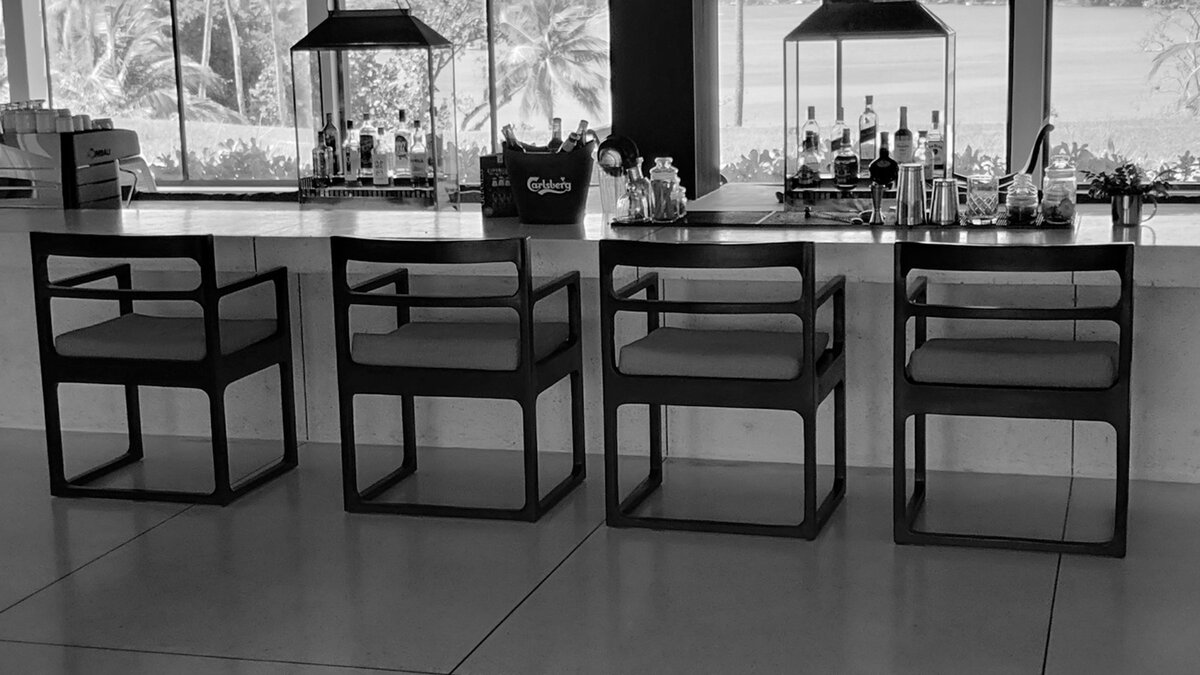
It is easy to see how the aesthetics he encountered on his travels and in these publications influenced his design sensibilities. Bawa often tinkered with, refined, and adapted design ideas to suit local circumstances, ultimately arriving at a ‘new’ design. This is evident in the furniture he created. From the wood-and-leather Saddle Chair he designed for the bar at Neptune Hotel in Beruwala, (possibly inspired by Danish designer Illum Wikkelsø’s 1960s Sling Lounge Chair), to the Next Door Cafe Chair (inspired by the classic Safari Chair originally adapted from traditional British army models ), and the Kandalama Lounge Chair (created in response to Russell Hall’s distinctive corrugated steel furniture), Bawa borrowed, emulated, and drew inspiration with aplomb.
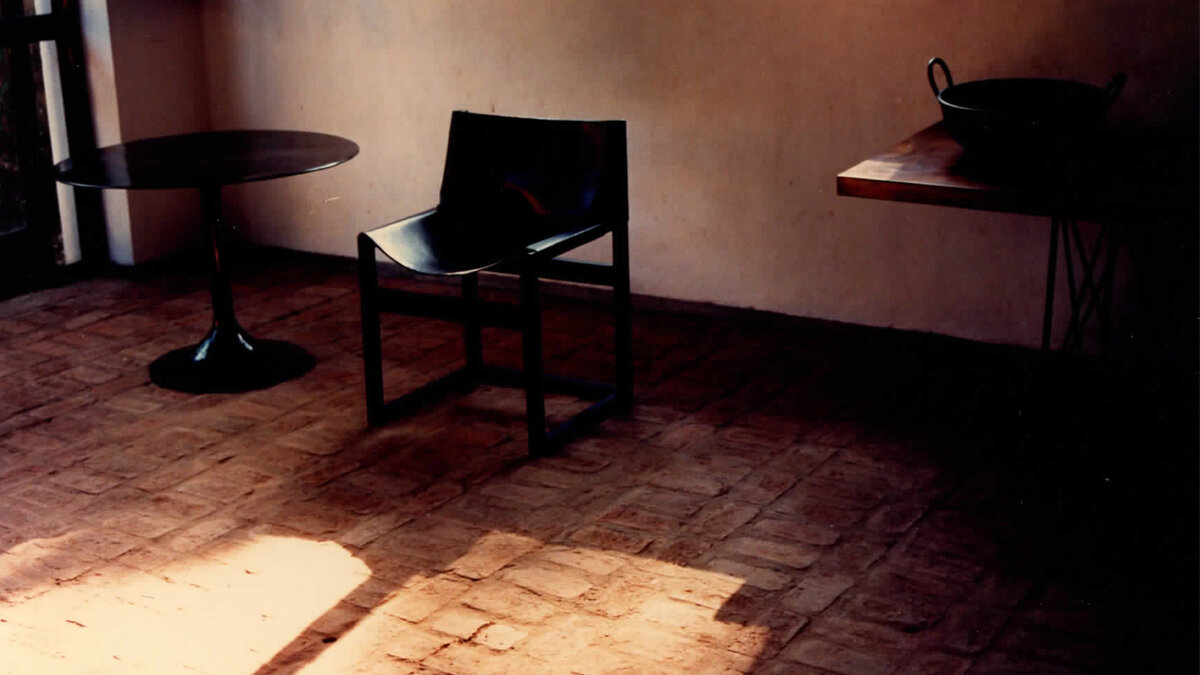
This is noteworthy because Bawa's design language is understood almost exclusively in terms of his architectural projects, while his equally distinctive approach to furniture and interiors receives far less attention. Bawa’s indoor spaces were multilayered landscapes built on juxtapositions—contrasting forms interacting with each other, local South Asian idioms placed alongside ‘global’ elements, modernist objects paired with antiques. This could seem unremarkable to a world familiar with the eclectic mashups introduced by Post Modern design. But unlike the often rootless, historical pastiche of Po-Mo, Bawa’s use of contrast in his interior design was deeply rooted to its time, and often an exploration of his multicultural, postcolonial identity. What was unique about his approach to furnishing interiors, whether with art, sculpture, colour, plants, or furniture, was that every element served his overall vision for the space.
A small but telling example of this philosophy was an art exhibition Bawa curated for the British Council in 1992, titled, Objects That Enhance Architecture. It was a phrase that perfectly captured how he viewed art, objects, and furniture: not as standalone pieces, but as integral to the overall experience of a space.
Objects of Resilience: Bawa’s Furniture and the Spirit of Making
In the summer of 2003, Bawa passed away at the age of 83. Many of the furniture pieces built during the course of his life remain in use in the places they were designed for. Others have been lost, to time, or, at least in two cases, to the 2004 tsunami. But those remaining have never been brought together as a collection, and the many stories of Bawa’s forays into furniture design have never really been told—until now.
These stories are important to understand the history of making in Sri Lanka, and South Asia. But also, to track how design can shape, and be shaped by, a nation’s cultural and political journeys. Bawa’s architectural work, often reductively described as ‘tropical’ modernism—a subtle discrediting of its value within modernist history, still a bastion of the Global north—continues to be significant in South and South East Asia. It is no exaggeration to say it changed the spatial configuration of the hospitality industry in these regions.
For much of the time Bawa worked, his country was caught in strife. In 1983, shortly after the new parliament he designed opened its doors, civil war broke out in Sri Lanka. The twenty-six-year conflict would last a whole six years longer than him. But while he remained largely disinterested in politics, one could argue that his belief in cultural pluralism and internationalism reflected in his diverse collection of objects, wall hangings, artefacts and even the part-inspired, part-experimental furniture he created.
Then there were the ecosystems of makers (some elite, but not all) that Bawa managed to create. His design style shifted through the years, from Corbusier's modernism to critical vernacular architecture, to minimalism, but his delight in interesting design, his attention to place, context, climate, material, and the people who helped him implement his plans remained a cultivated constant.
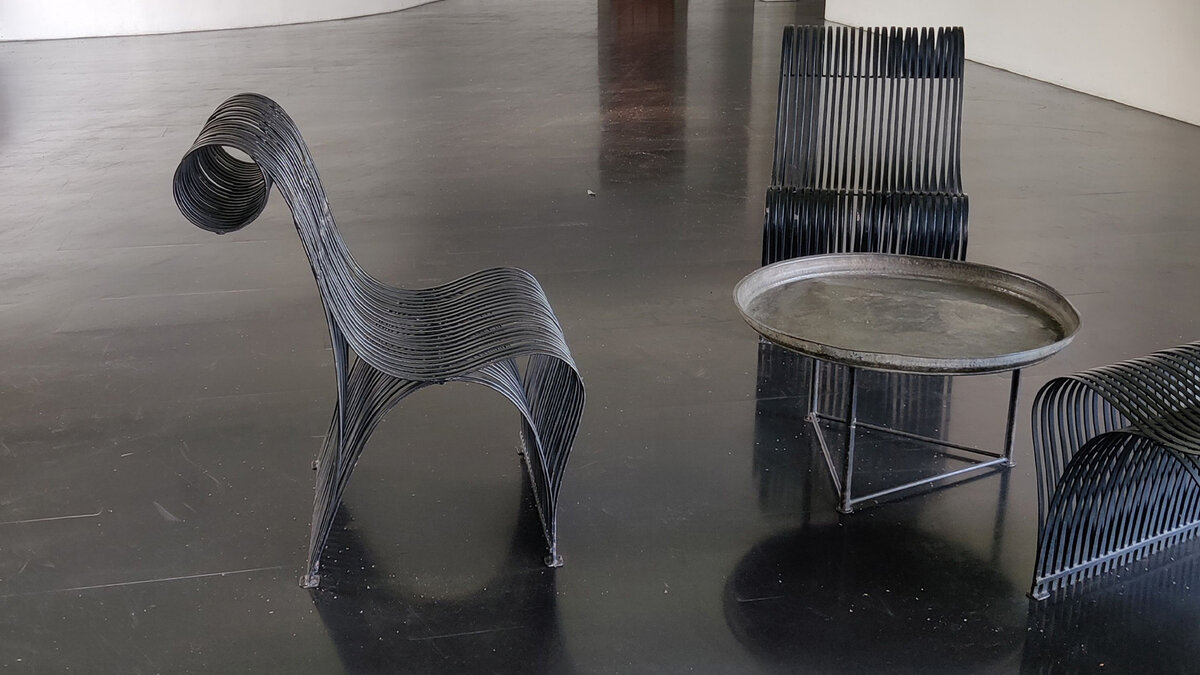
On the whole, Bawa’s designs may be described as acts of agency, not defiance. In their resilience, the joy in trial and error they embody, Bawa’s furniture is a testament to the spirit of making, the hunger to create and how both can thrive even in the midst of violence, state-exercised restrictions, and limited resources.