A Quiet Place: Phantom Hands & the Geoffrey Bawa Trust Reimagine Lunuganga at the 2025 AD Design Show
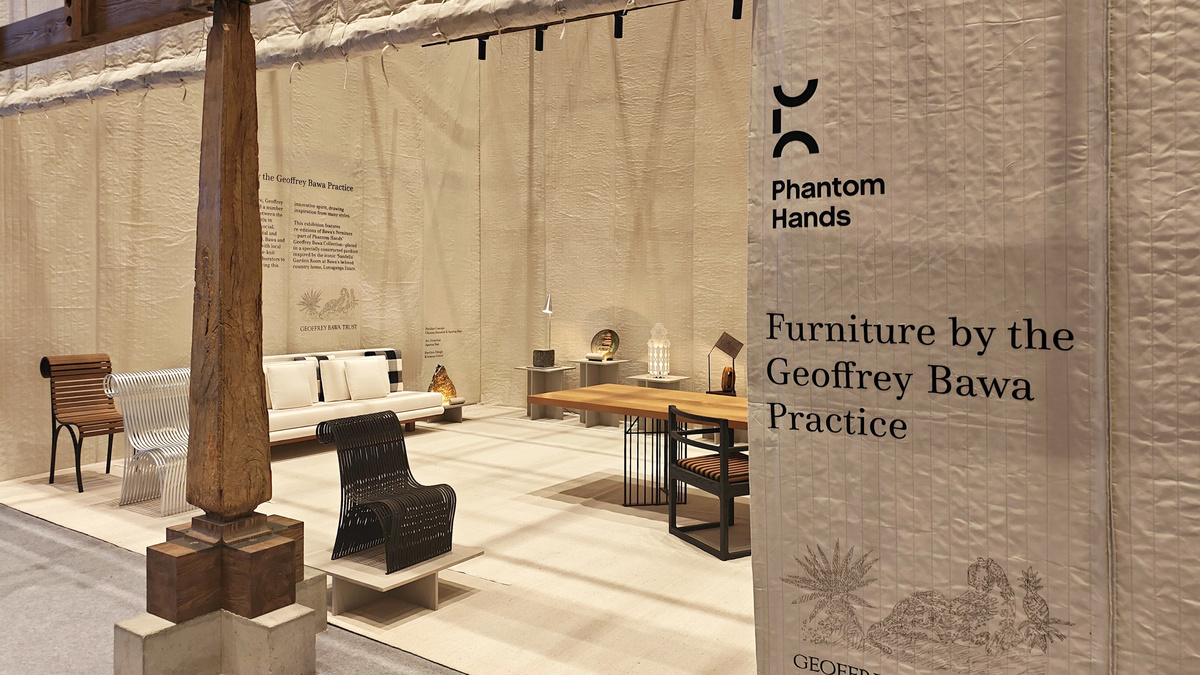
Image by Phantom Hands
Phantom Hands Editorial
20.05.2026
For Phantom Hands, whose practice has consistently engaged with modernism in South Asia, staging the Bawa Pavilion at the 2025 AD Design Show marked an evolution from maker to interlocutor. In the act of translating Lunuganga’s thoughtful beauty for an entirely different context, new meanings surfaced, and new resonances emerged.
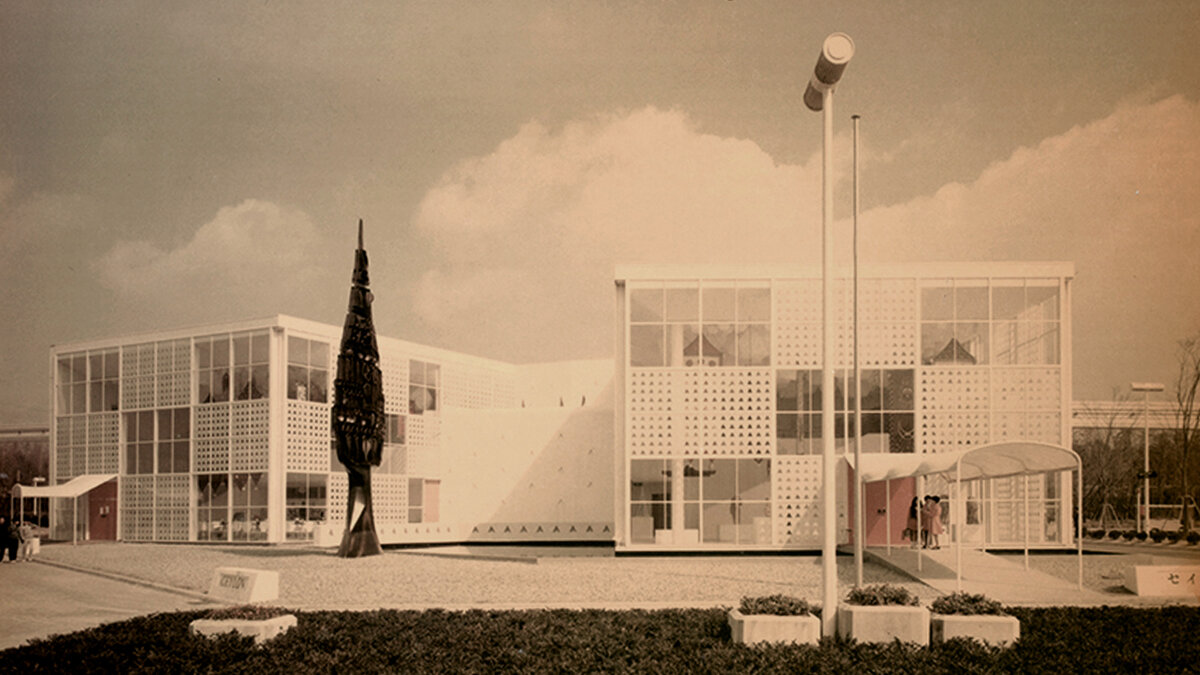
In the summer of 1970, the hills of Osaka were transformed into a surreal landscape of geodesic domes and sci-fi pods for the Expo ’70 world fair themed ‘Progress and Harmony for Humankind’. Amidst the futuristic clamour, one structure stood as an outlier. This was the Ceylon Pavilion, designed by the Colombo-based Edwards, Reid and Begg, then headed by Geoffrey Bawa.
(Image © Geoffrey Bawa and Lunuganga Trusts)
A space of profound composure, the pavilion, which presented the Sri Lankan identity as a balanced reconciliation of its past and future, was widely praised. A congratulatory note to Bawa from Jim Richards, the editor of The Architectural Review, referred to it as “elegant”, and “without fuss”.
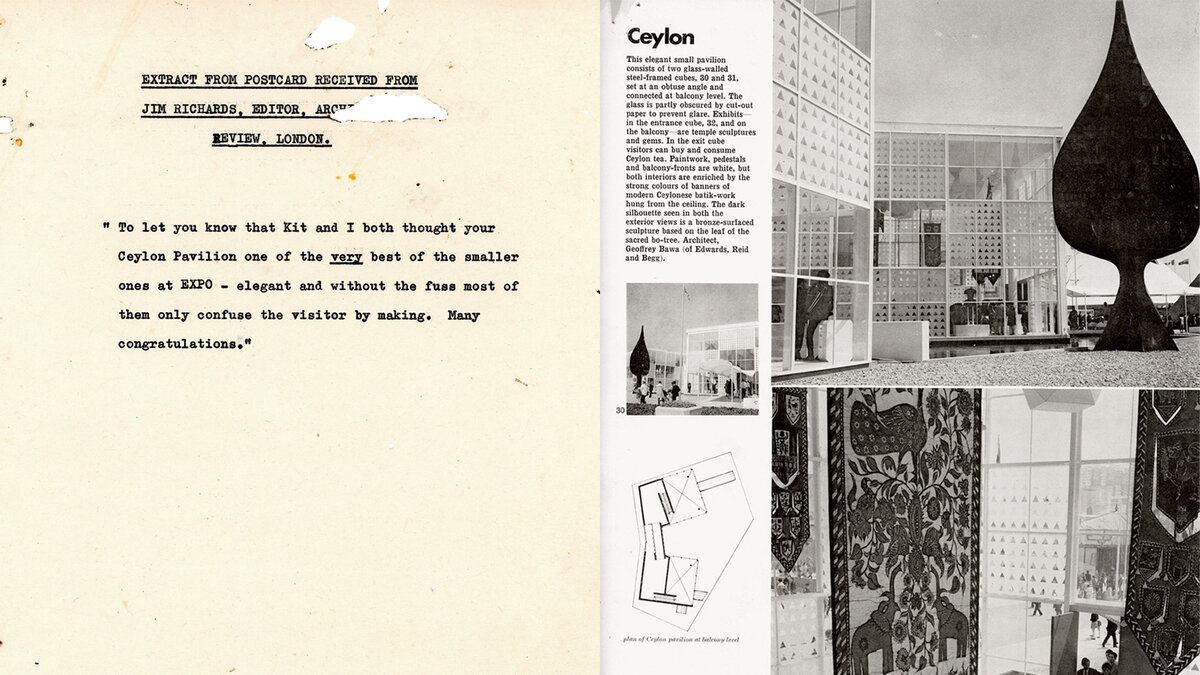
Right: The Architectural Review magazine’s Osaka Expo issue feature on the Ceylon Pavilion.
(Images © Geoffrey Bawa and Lunuganga Trusts)
Fifty-five years later, echoes of that elegance and lack of fuss would be heard on the Indian mainland, with a shift in size and focus—from the national to the domestic, from the sweeping to the hyper-specific. This was Phantom Hands’ Geoffrey Bawa Pavilion at the 2025 edition of the AD Design Show. Like its spiritual predecessor, it too was an outlier.
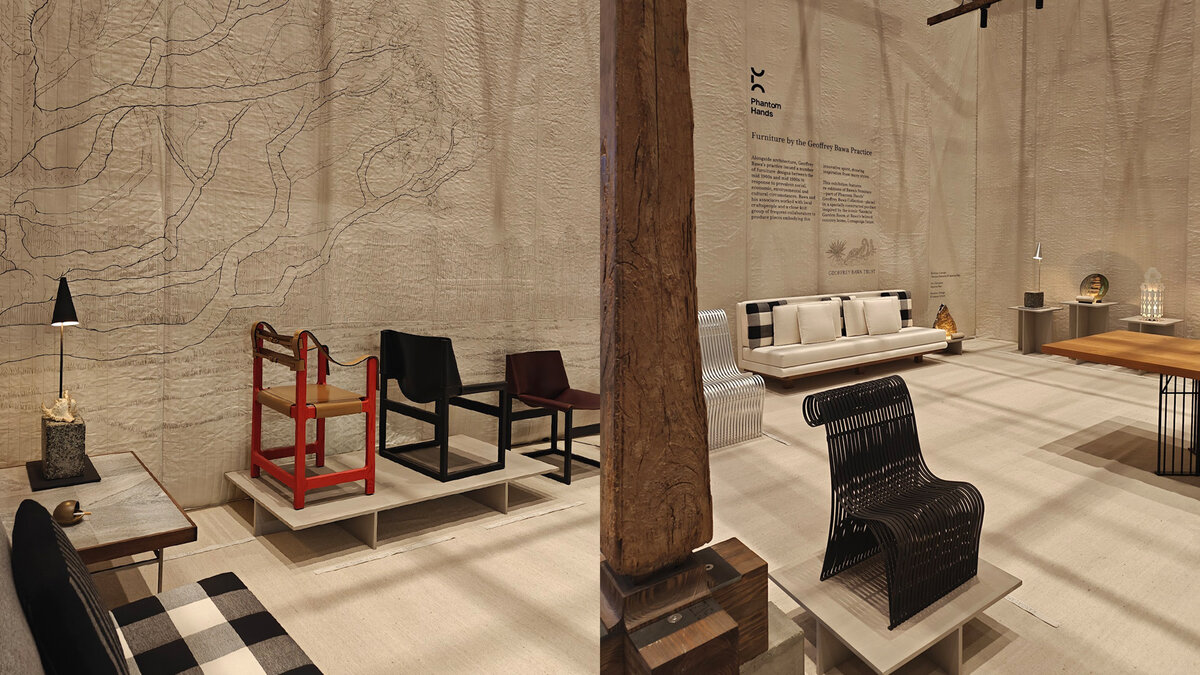
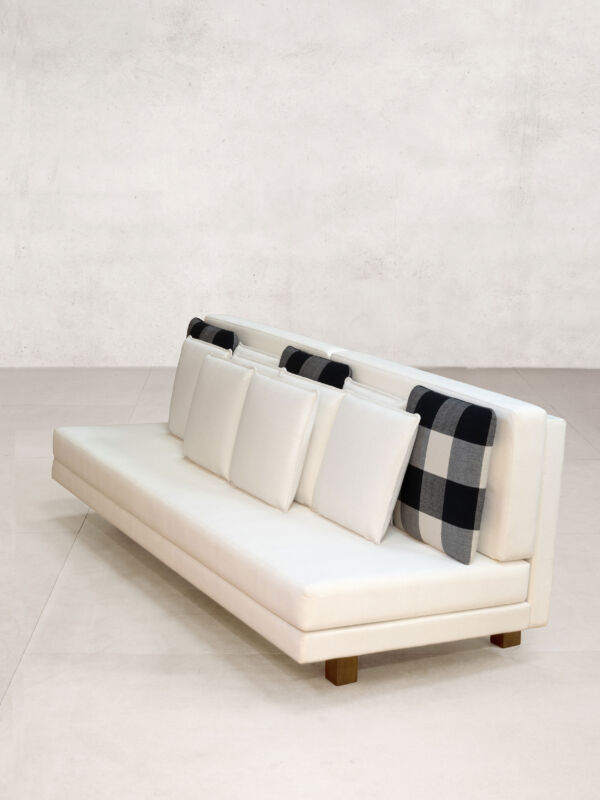
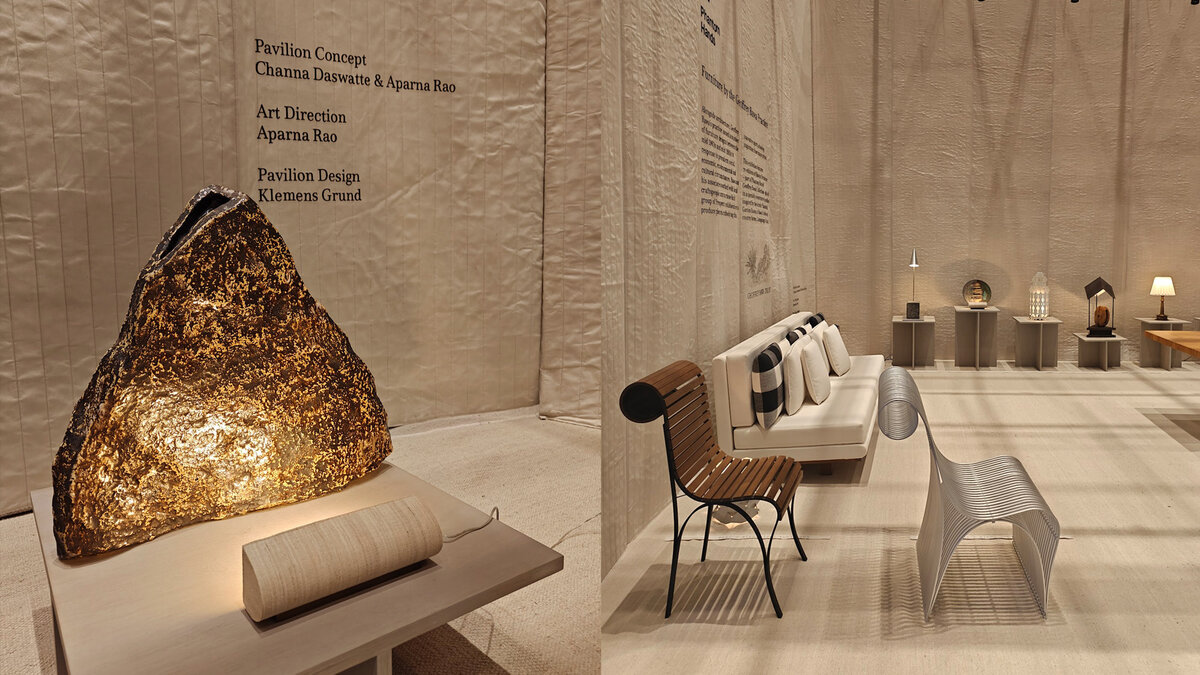
The Pavilion, an approximately 13 x 8 x 6-metre, A-framed, quilted cotton tent, sat inside one hall of the Jio World Convention Centre in Mumbai. If this seemed like a curious place to pitch a tent, what was inside was even curiouser—a motley collection of chairs, a long table, a sofa, some lamps. Across two adjacent walls of the structure, against the backdrop of a line-drawn lake, a tree limned its spreading branches. It was as if an eccentric domestic deity had decided to set up home there, landscape and all.
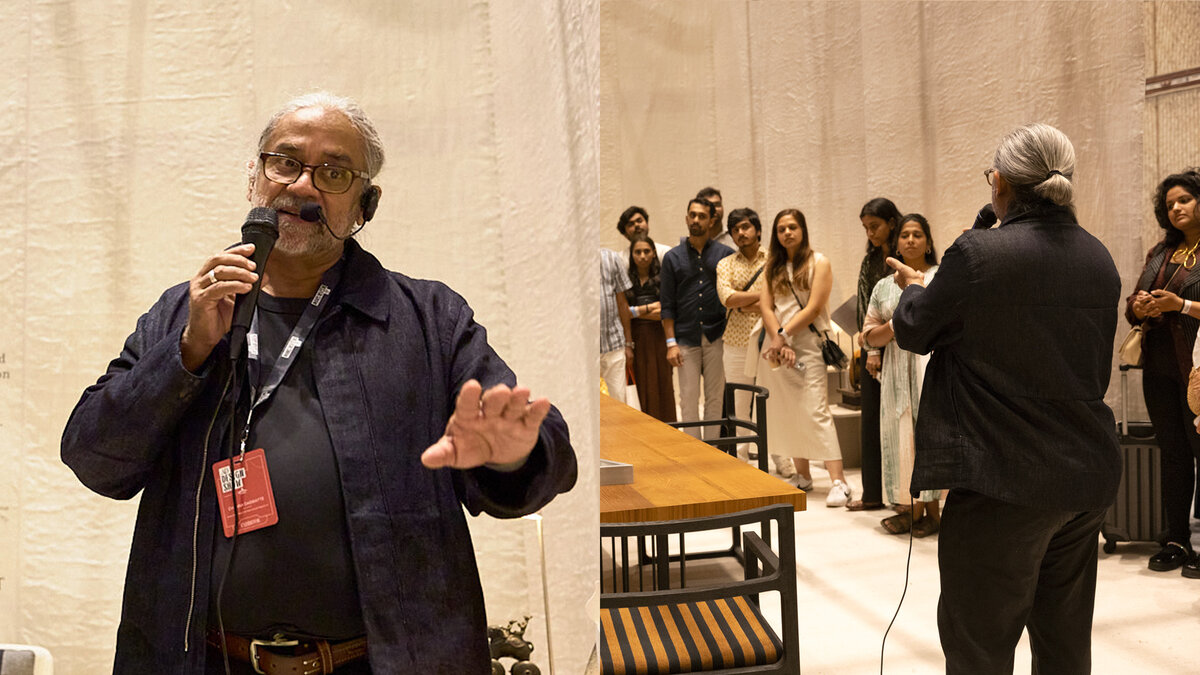
On the afternoon of the show’s opening, architect Channa Daswatte—Bawa’s last associate and now chairperson of the trust that bears his name—stood at one entrance of the Bawa Pavilion. From the outside, the cloth-wrapped pavilion appeared like a sensory oasis, inviting overstimulated design-fair attendees to step in and be soothed. The visitors who wandered in took a minute or two to reorient, blinking slowly, as they reconfigured their minds from the chaos outside to sudden calm. Daswatte was leading the first walkthrough of the Bawa Pavilion, and his audience—a mix of students, professionals, and design enthusiasts—was hanging on to every word.
Reverse Engineering
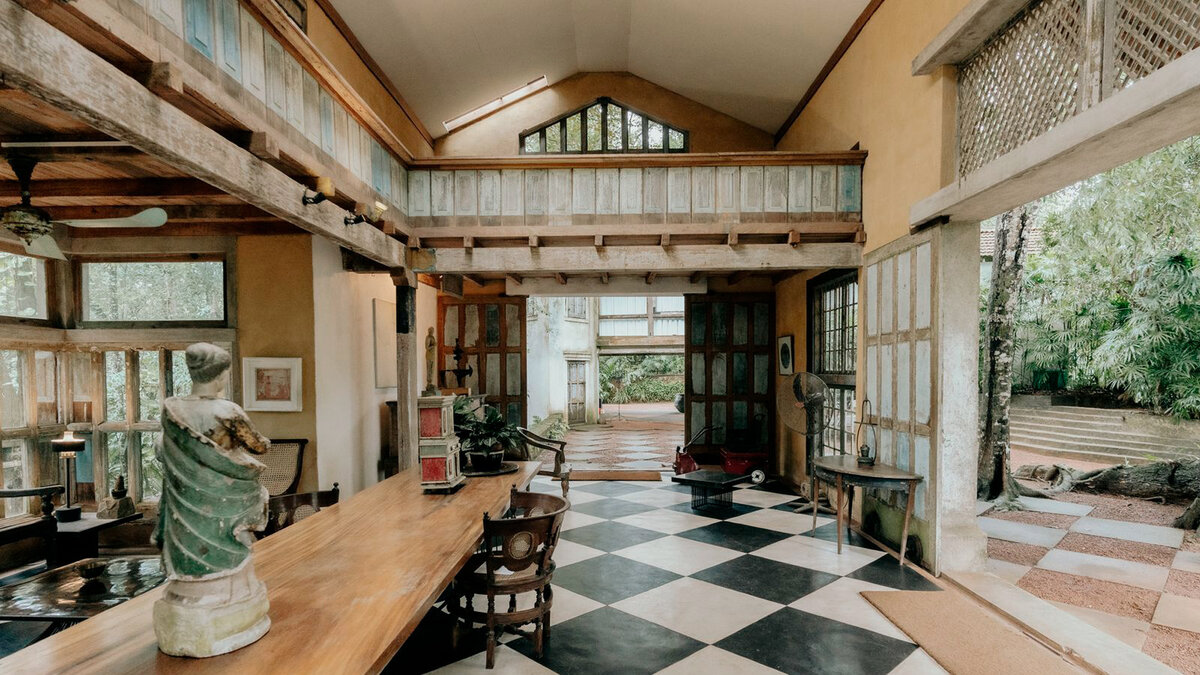
The entire project was born out of one particular aesthetic anxiety. Last year in Milan, Phantom Hands was to hold its first commercial exhibition of the Geoffrey Bawa Collection, which it had spent the last few years fastidiously re-editing. The studio’s co-founder, Aparna Rao, realizing that Bawa’s pieces—designed for the honeyed light of the tropics and Sri Lankan spaces—looked deeply out of place against the gallery’s black walls, decided to counter the sense of displacement by draping the walls with a hand-stitched trompe l’oeil tapestry she designed, inspired by the Sandella garden room at Lunuganga.
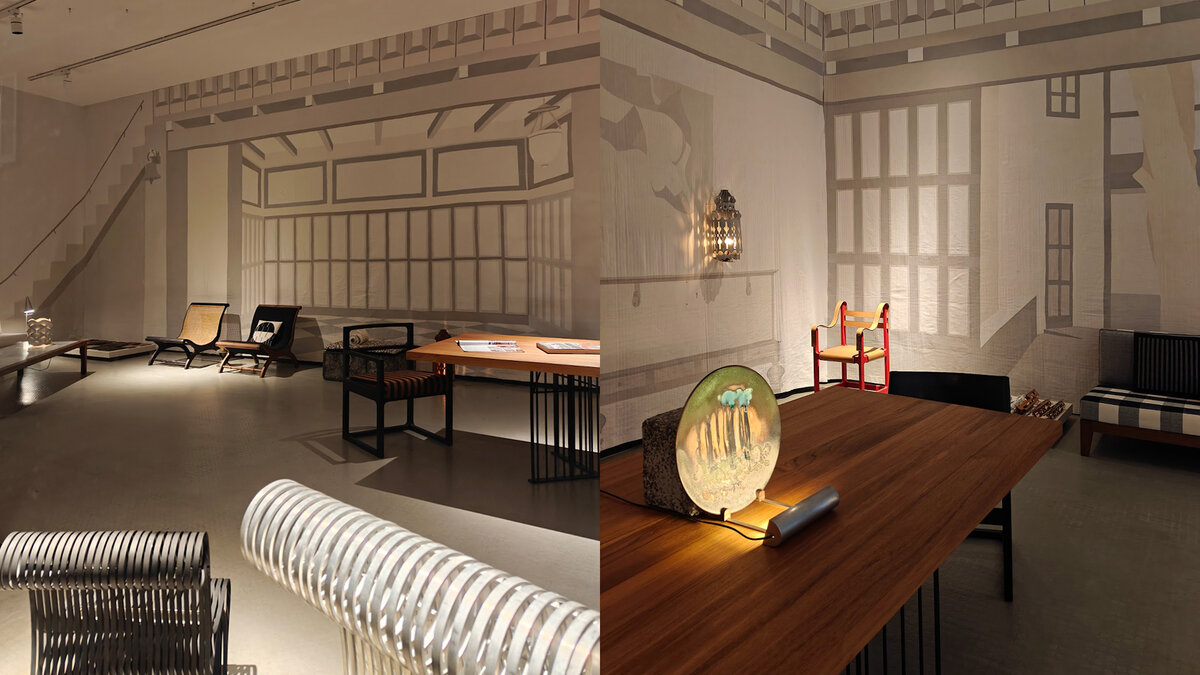
Rao understood, perhaps better than most, that showing the pieces was not enough—it was essential to recreate a sense of the space that once held them. When Daswatte walked into the gallery, so charmed was he by the tapestry’s layered interpretation of the Sandella’s spirit that he proposed the idea of a travelling exhibition tent.
Daswatte was not the only one charmed. Shortly after, Komal Sharma, AD India’s then editor, dropped by. “It felt like a world away from the madding crowds of Milano and the buzz of Salone,” Sharma said, and immediately proposed an exclusive Phantom Hands pavilion at the AD Design Show, seven months down the line.
For the Bangalore-based workshop, it marked a major experimental pivot—from the micro-precision of furniture to the expanse of an architectural space, designed specifically to showcase that furniture.
Growing Ambitions
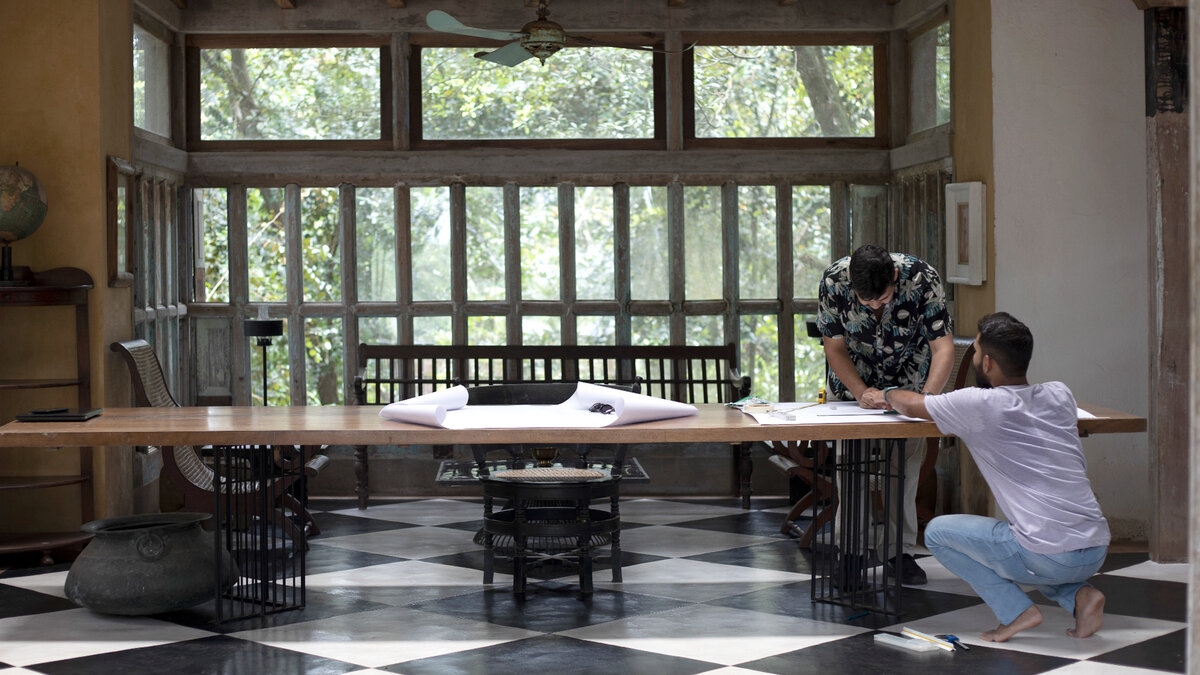
Phantom Hands first started working with the Geoffrey Bawa Trust in 2022. What began as a commission for six pieces of furniture, over a period of two years, grew into a collection of fourteen after the studio made a case for an expanded selection that better captured the long arc of the Sri Lankan master’s story. Now, they had a new ambition: to create a stage for that collection.
Every place is beloved by someone, and anyone who has been to Lunuganga senses how deeply Bawa cherished it. “It’s hard to describe, but it’s a very moving experience being there,” says Deepak Srinath, co-founder of Phantom Hands. The studio’s attempt then became threefold—to contextualize the pieces they were showing; to emphasize the connection between the shared motifs in the furniture and the space; but also, and perhaps most importantly, to recreate for visitors the feeling of being in Bawa’s Lunuganga.
Building Atmosphere
The challenge went beyond simply building a booth to articulating a position within a crowded commercial setting. How might one translate an architectural practice shaped over decades into a temporary structure assembled in days? And how might that structure communicate something of Bawa’s sensibility without lapsing into pastiche?
Rao’s original idea—of recreating the Sandella garden room as a stage—was the primary guide for the studio’s response. Her subsequent artistic direction established the aesthetic and material palette. To bring the design to life, Phantom Hands called on its longtime collaborator Klemens Grund, a German-born designer with a deep affinity for what he calls “micro-architecture”. Grund was, in a sense, a natural fit for a project steeped in Bawa’s own method of assembling gifted collaborators from across disciplines. In commissioning him, and in the constant exchanges that followed between him and Rao, Phantom Hands was, consciously or not, carrying forward Bawa’s way of working.
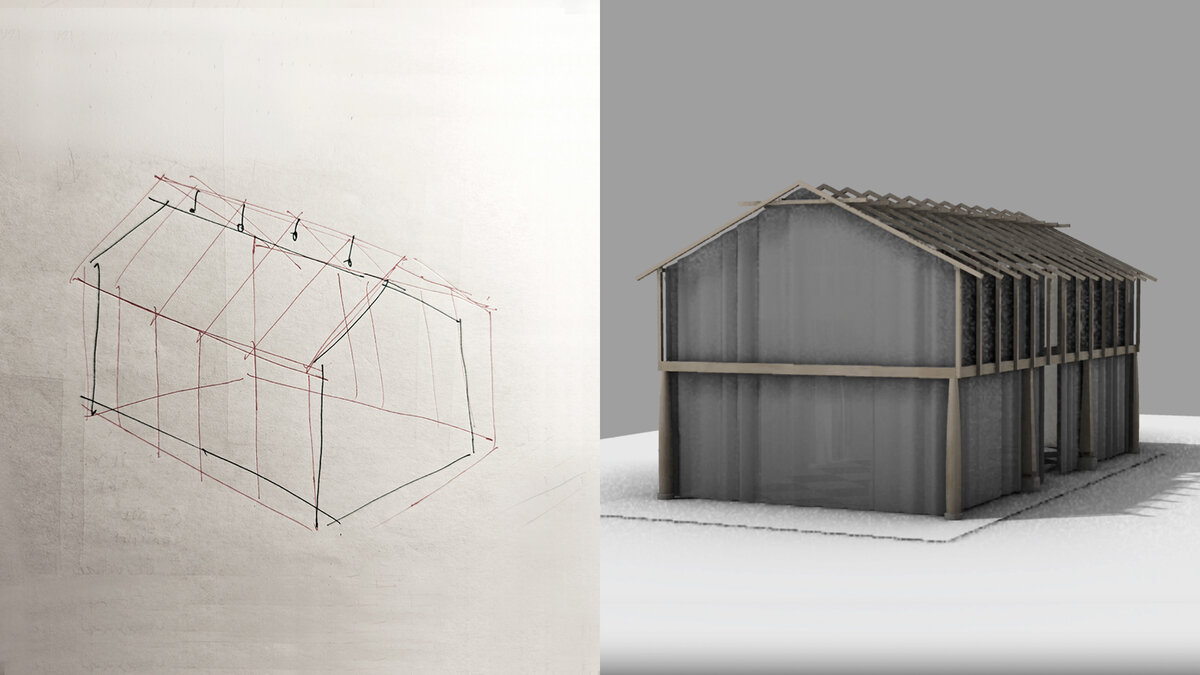
Right: One of designer Klemens Grund’s earliest renderings of the Bawa Pavilion.
Grund’s design process, as he describes it, tends to begin in complexity and end in simplification. “I boil it down,” he says, “getting rid of everything that is unnecessary, until the pure function, the pure shape, the pure, necessary things appear.”
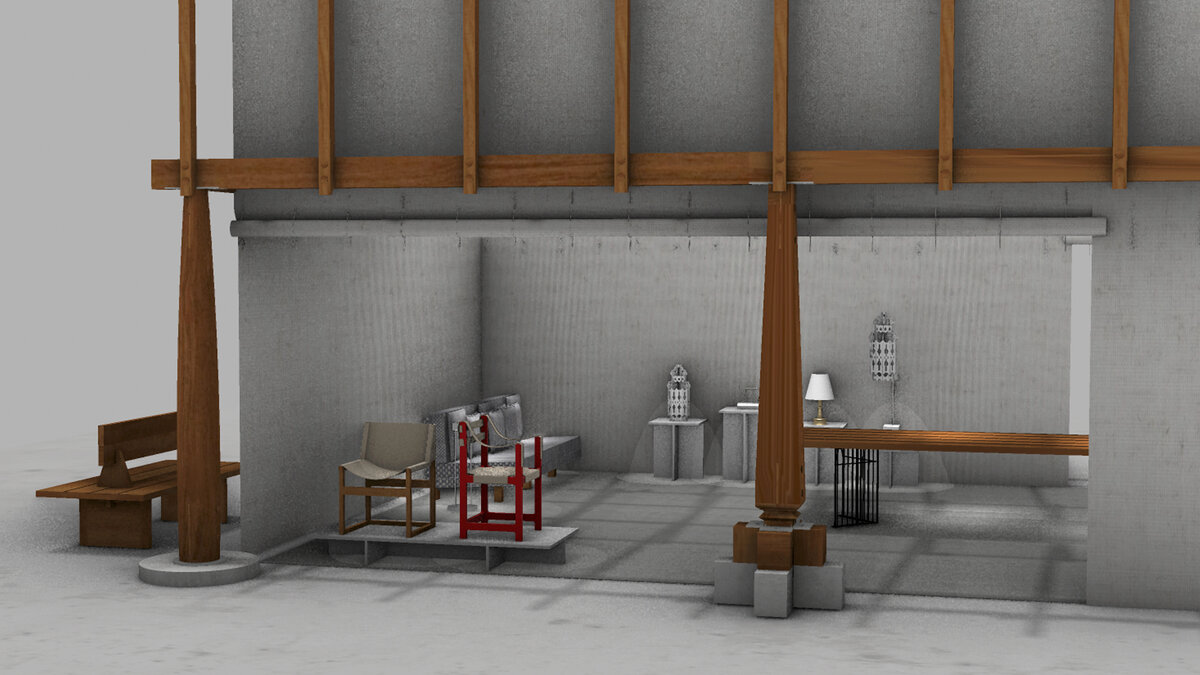
The Bawa Pavilion’s earliest iteration was a full one-to-one recreation of the Sandella room, complete with its double-height interior, windows, and chequerboard floor. But as work progressed and the realities of time, material and setting came into play, one after the other, the elements fell away. The chequerboard flooring was shelved because it posed a tripping hazard; the unnecessary roof evaporated; and the windows transmuted into fabric panels that could be rolled up.
Inside Job
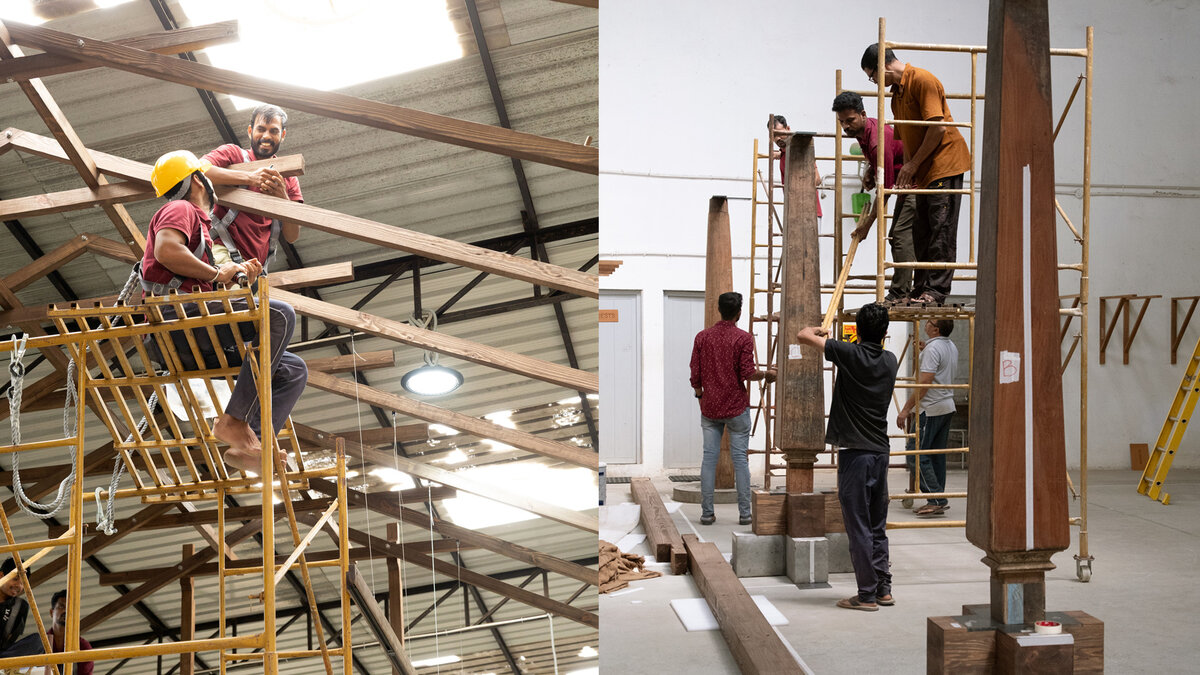
Behind the sense of calm conjured up by the pavilion in Mumbai was more than four months of frenzied activity in Bangalore.
Phantom Hands had enlisted more than 40 of its technicians across departments into this endeavour, and as drawings travelled back and forth across geographies and time zones, against a constant soundtrack of carpenters at work and the heavy-duty hum of sewing machines, materials were sourced, concrete was cast, rolls of fabric were stitched together, and installation logistics were mapped and remapped. For most of those four months, the studio buzzed with activity until midnight. It was a collaborative endurance test that saw Phantom Hands’ teams work frenetically, but enthusiastically, to shrink the distance between idea and implementation.
Source Material
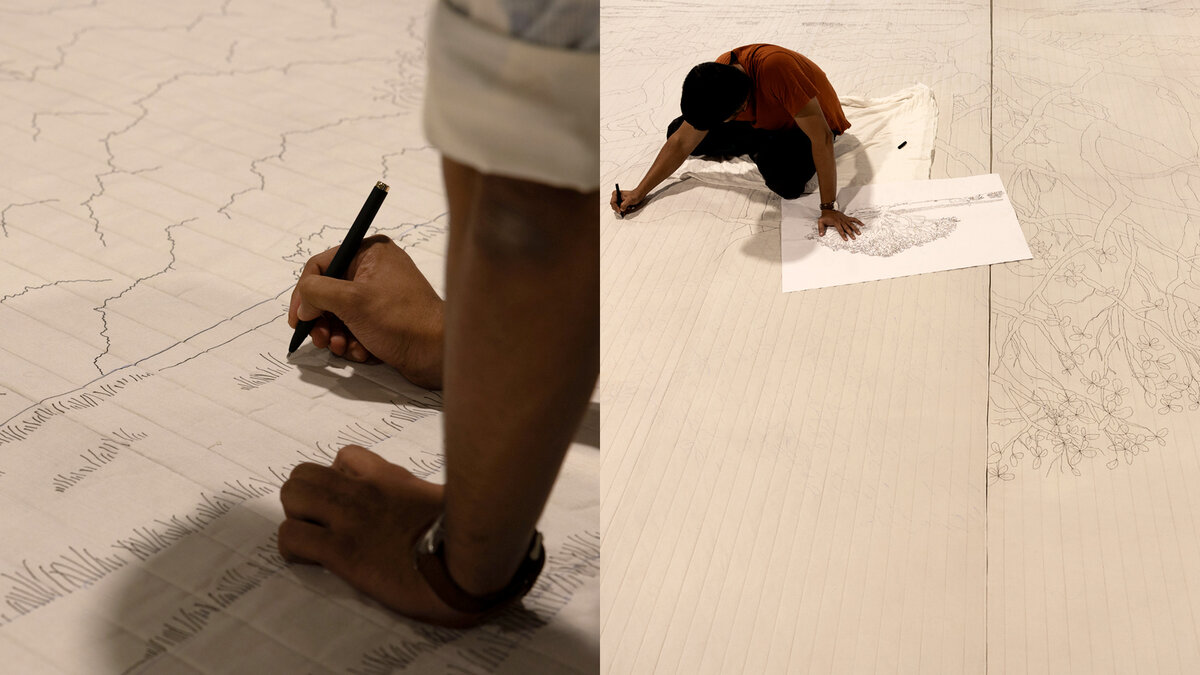
The pavilion’s materials were chosen with the attentiveness that characterizes all Phantom Hands’ processes. The quilted cotton fabric that formed its walls is a version of what the workshop uses to wrap its furniture before shipping. On two of those walls, Bangalore-based artist Dushyantha HP drew the spreading branches of a temple tree against the Dedduwa Lake, inspired by the view from the dining room at Lunuganga. Outside the structure, vintage wooden pillars on loan from Rao’s aunt’s collection anchored the A-frame, while underfoot, a single grey carpet held the space together. It was the kind of considered, delightful mishmash that Bawa himself would have taken pains to engineer.
Above the Noise
Grund, who worked almost entirely remotely from Germany, and never saw the finished pavilion in person, described his reaction when the images reached him. “It had the right amount of expression, but calmness at the same time,” he said. “What we found, in the end, was a kind of silent shout. Which is even more powerful.”
The powerful space became a bridge—between object and architecture, between past and present, between Sri Lanka and India. Here, instead of historical artefacts, visitors encountered Bawa’s designs as components of a living grammar born out of attentiveness to environment, material, and the rhythms of movement.
Daswatte has often spoken about how Bawa used objects to animate spaces. But these objects also serve a larger purpose; to condense the Sri Lankan master’s eloquent architectural vision down to a more accessible, more human level. In the pavilion, these objects and gestures became literal acts of place-making, invoking Bawa’s sensibility, which never superseded the realities of his world, but instead, by some strange alchemy, transformed them into a gentle invitation to engage.
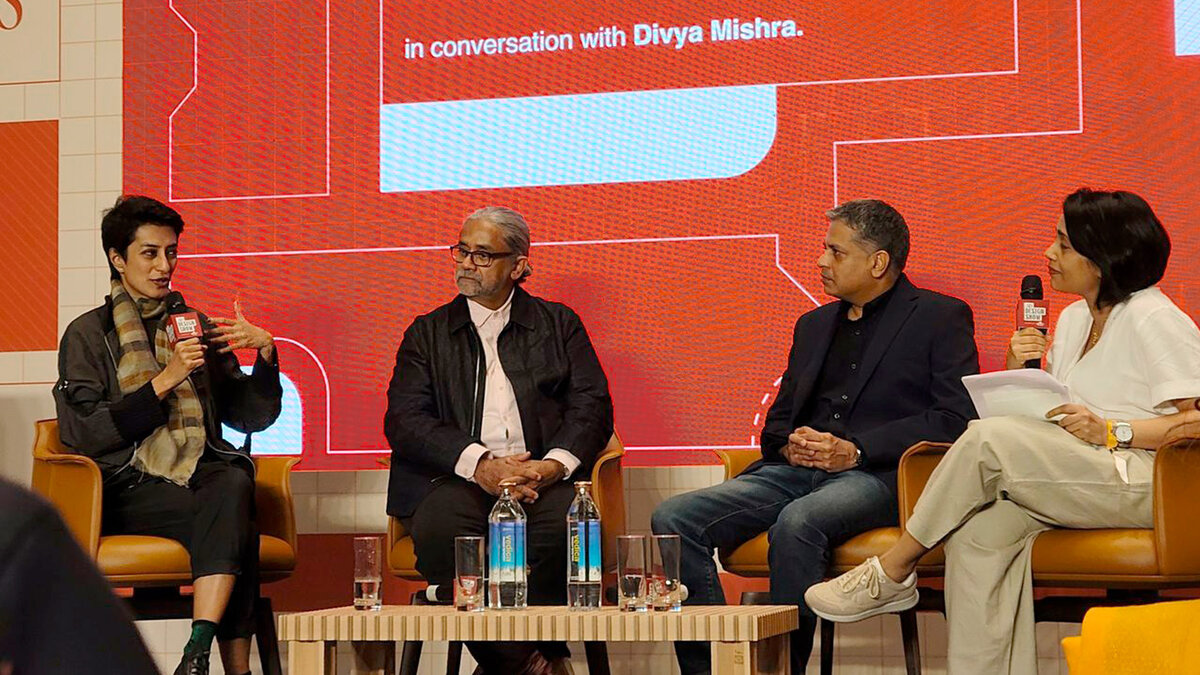
On the second day of the show, in a panel discussion, when asked about what Bawa might have thought of the Geoffrey Bawa Collection and the pavilion, Daswatte paused for a second, then laughed. “I think he would be amused…and pleased.”
It’s easy to see why. Osaka of the ’70s and Mumbai of 2025 might be worlds apart, but in both settings, amidst the fluorescent churn of fairs, Bawa’s sensibility stood out—elegance without fuss, across space and time.