An Excavation of Intent: The Making of Phantom Hands’ Geoffrey Bawa Collection
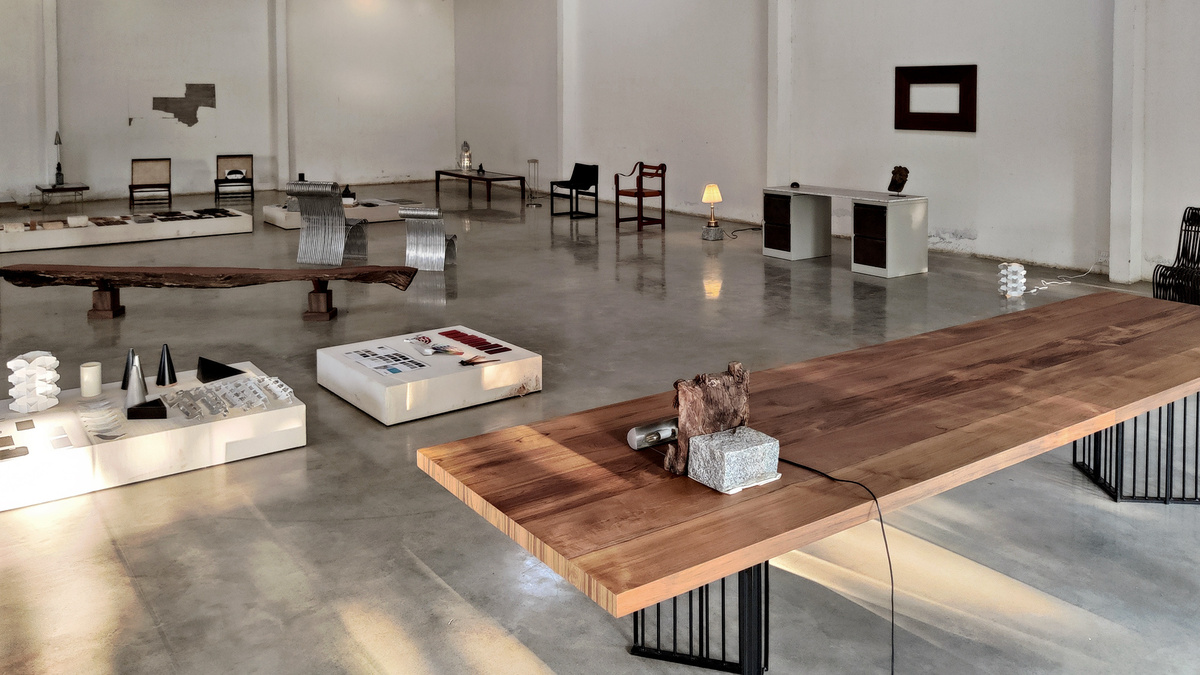
Image by Phantom Hands
Parni Ray
05.09.2026
What does fidelity to a posthumous design legacy mean when that legacy lies encrypted in the objects and relationships it left behind? For Phantom Hands co-founder Aparna Rao, recreating Geoffrey Bawa’s furniture meant working backward into his reasoning. But the endeavour opened a window into the architect’s central guiding intelligence that would have been impossible to encounter any other way
A Pattern Emerges
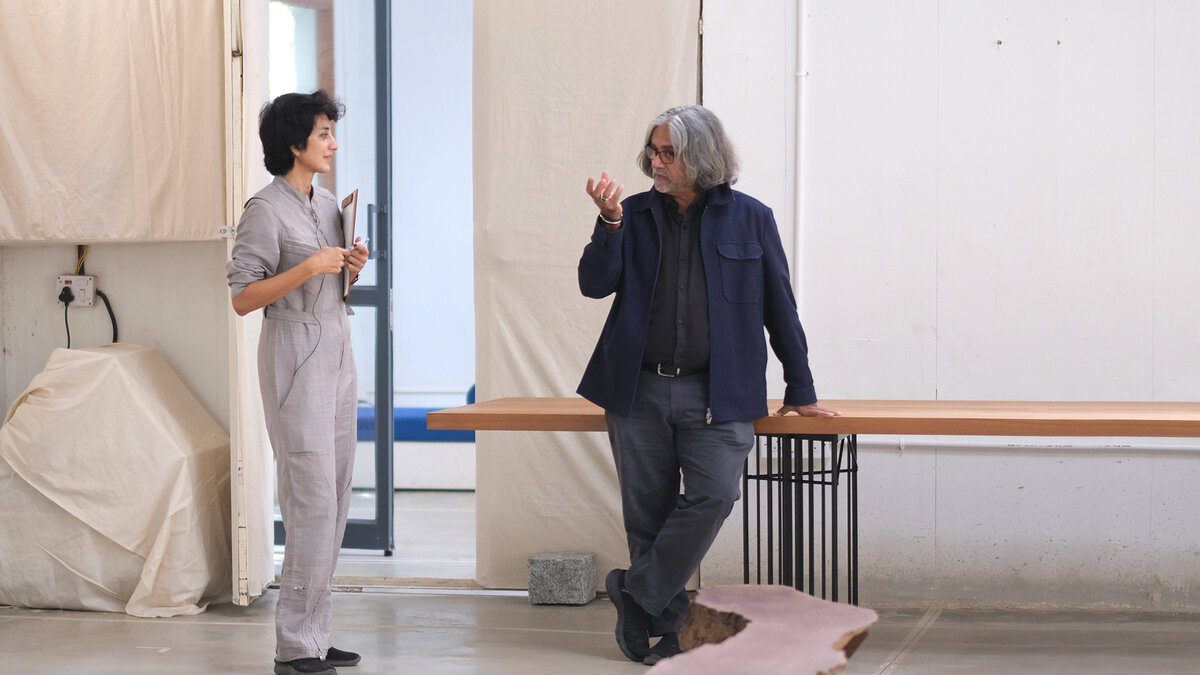
In April 2024, Channa Daswatte, Geoffrey Bawa’s last working partner and the chairperson of the Geoffrey Bawa Trust, landed in Bangalore. He was visiting at the invitation of Phantom Hands. Daswatte had previously toured their workshop, observing the woodwork, cane weaving, and upholstery processes. But this visit was different, and began with him being led down a narrow alleyway to a 3,000 square-foot studio he had never seen. “We kept the prospect very low-key, because I wanted to see his genuine reaction to what we were about to show him,” says Aparna Rao, the co-founder of Phantom Hands.
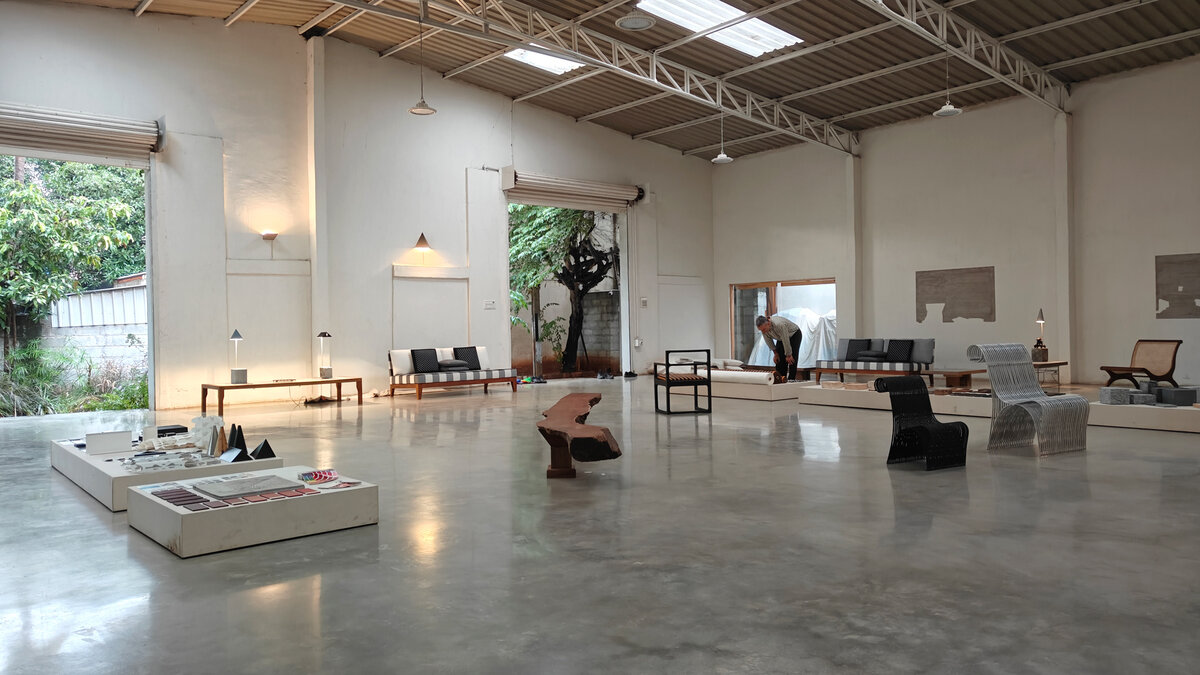
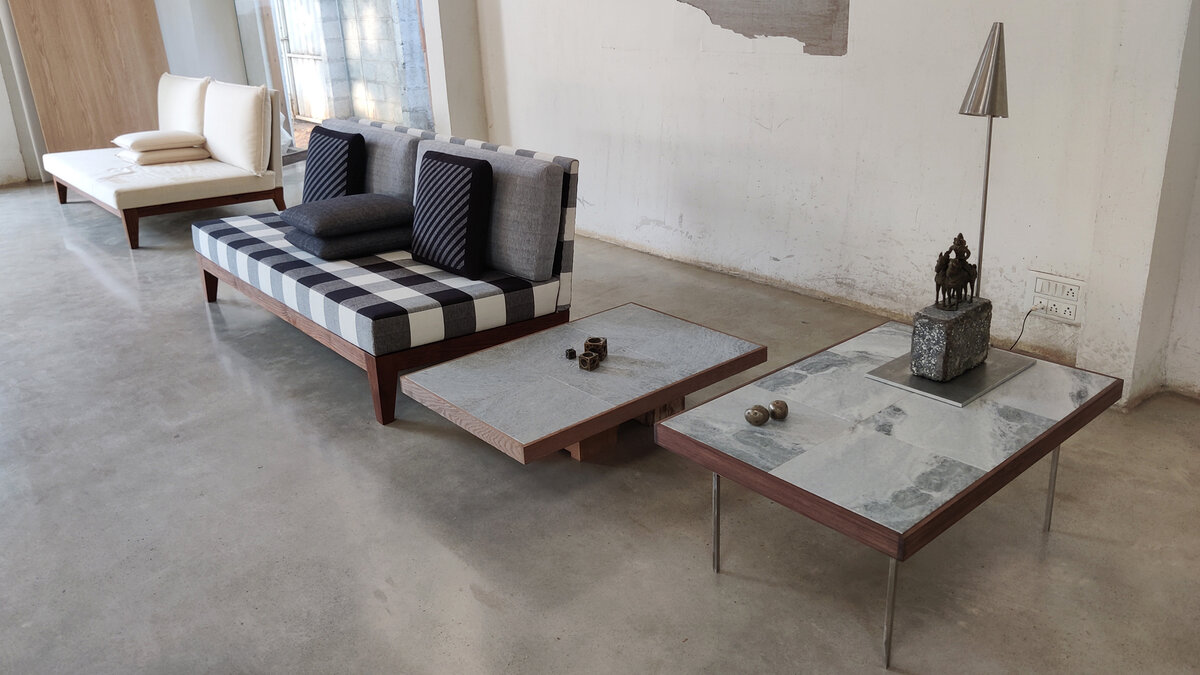
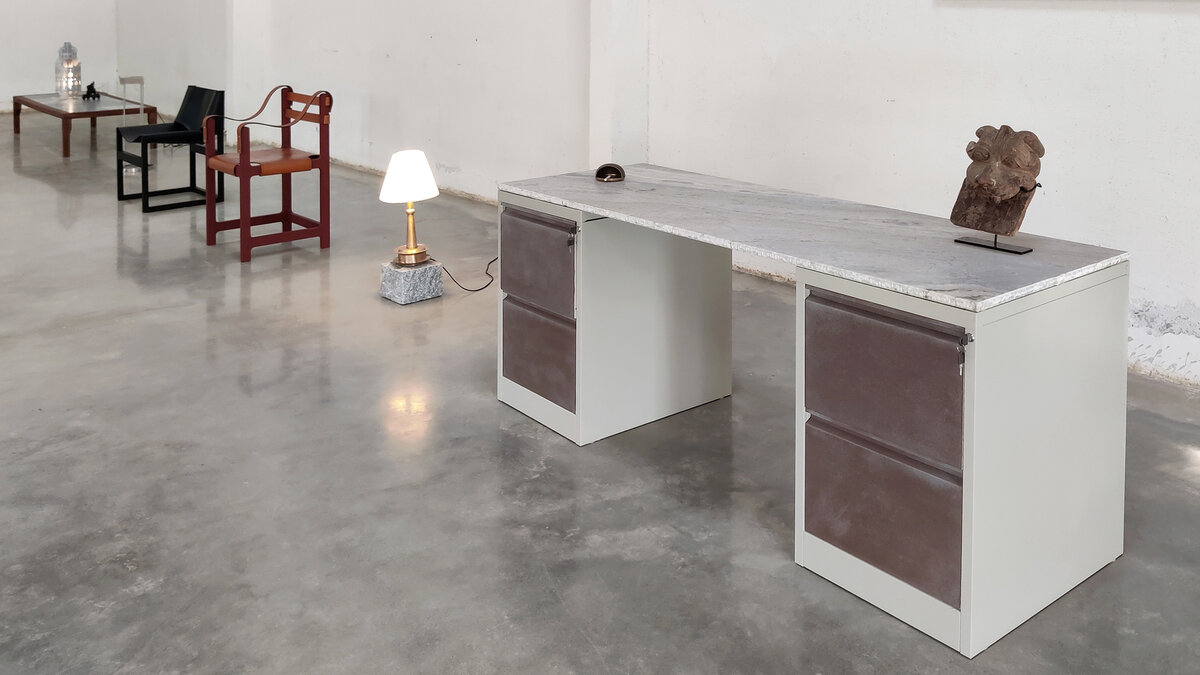
Arranged inside the sprawling studio was a recreated collection of 30 pieces of furniture designed by Bawa for various projects from the 1960s until his death in 2003. Most had never been reused or displayed together. Daswatte himself had never seen them all in one place. Neither had Bawa. Daswatte walked through the space, silently absorbing the import of what he was looking at. Finally, he turned to Rao and quietly said, “This could be a show at the MoMA—we have to share this with the world.” It was a poignant moment for Rao, who had spent the past 14 months grappling with the gnawing anxieties of a project that demanded not only deciphering a late master’s original vision, but questioning the rationale and the scope of recreating it, and finally, remaking those pieces in ways that would honour the archetypes, while still being relevant to 21st Century lifestyles.
It speaks to the depth of Bawa’s inventiveness that where the initial plan had been to stop at six pieces, Phantom Hands ended up prototyping 30.
Reimagining a Legacy
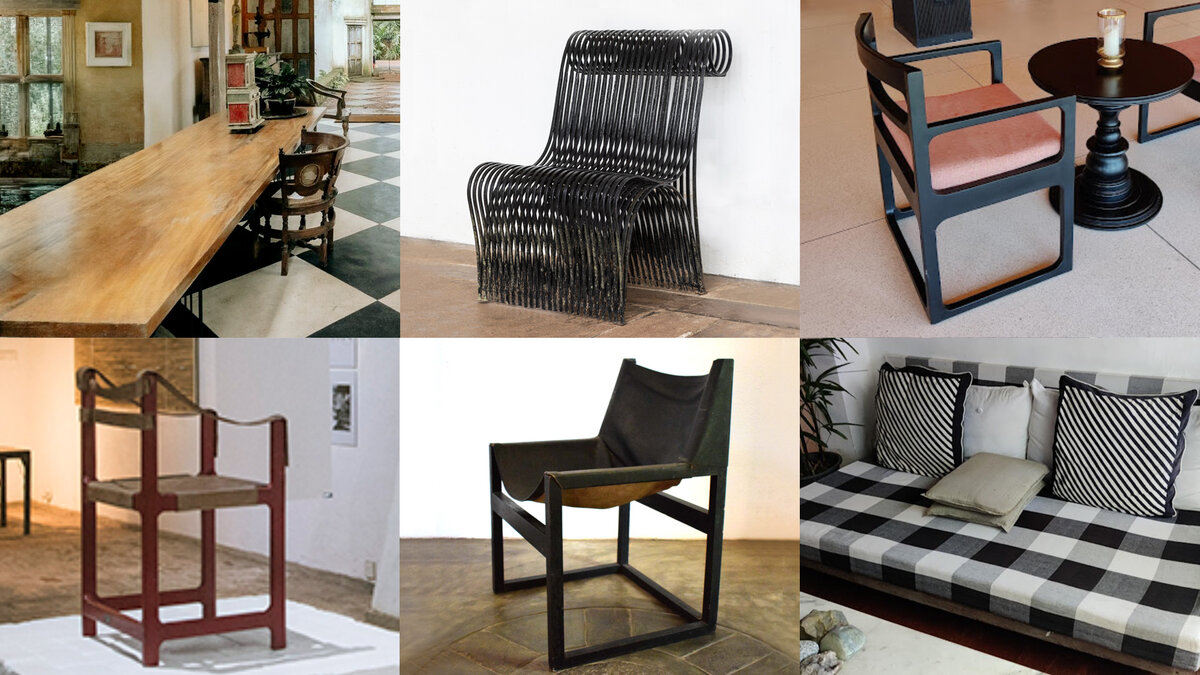
The journey, though, began about four years ago in 2022, when Rao and Phantom Hands’ co-founder Deepak Srinath visited Colombo. They were introduced to the Geoffrey Bawa Trust by a long-time patron, and attended an exhibition marking Bawa’s centenary. Among the displays were some of his lesser-known works, including a limited-edition folio of Bawa’s furniture. “At the time, I found it very difficult to relate to the pieces because they seemed designed to play a very small part in these strong, iconic spaces,” Rao recalls. But her regard for the authenticity and ontological locationality of Bawa’s architecture overcame her initial reluctance, and she and Srinath quickly picked out the models they thought Phantom Hands could recreate—a sofa, a table, four chairs. “Representing someone of this stature from this part of the world also just seemed like the right thing for us to do—as a kind of homage,” Rao says.
Like many designers, Bawa was given to recreating pieces he encountered in his travels, or in design magazines. Often, he would adapt them to local conditions and materials.
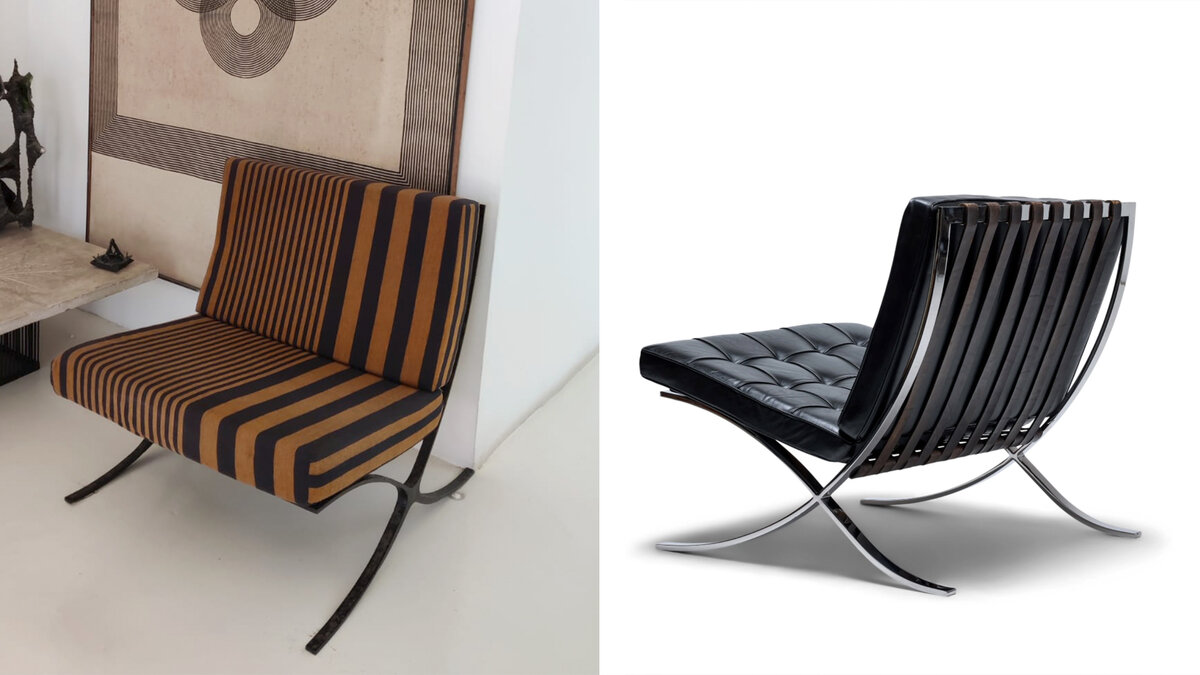
But recreating those would pose copyright challenges, Rao and Srinath knew. Instead, they picked six pieces that were simple, functional, and timeless. More importantly, they were unique, and original enough to safely move forward with. The Trust agreed to their proposal to recreate them.
Beyond the Blueprint
Rao’s initial approach to the prototyping was to commit fully to Bawa’s originals. So, all the details, from uneven welding marks to unfinished edges, were replicated painstakingly.
The results, paradoxically, were uninspiring. Out of context and stripped of time, the pieces seemed to have lost their character.
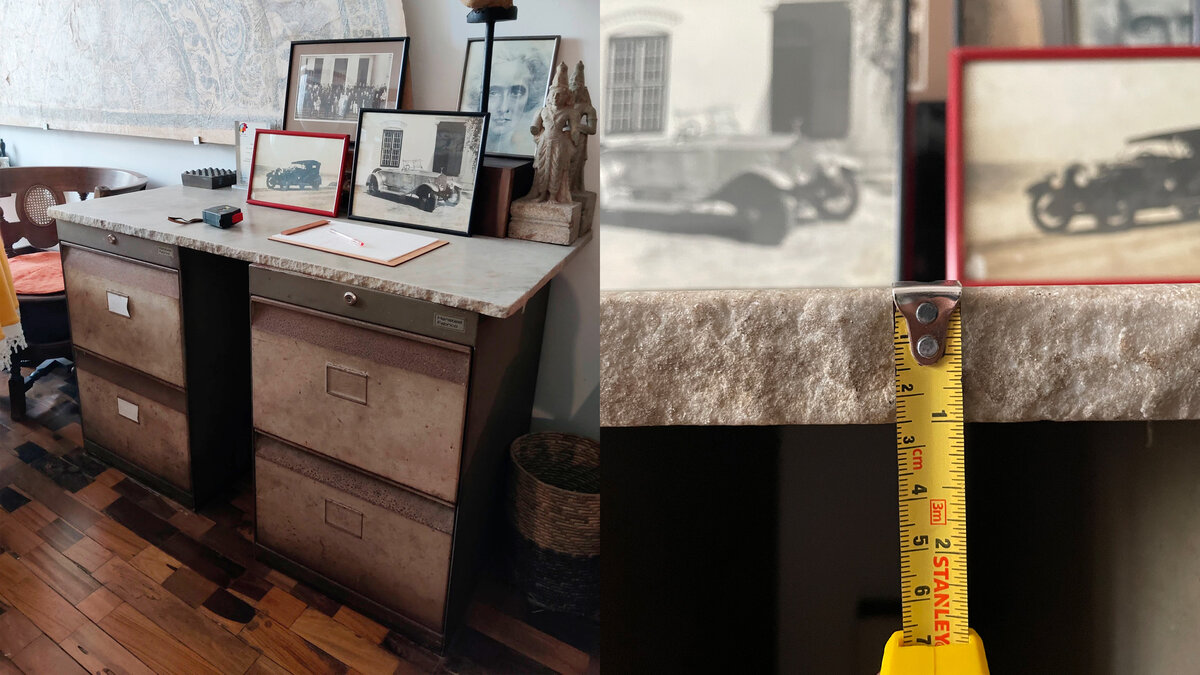
“When I saw the first prototypes, they felt disappointingly ordinary.” Rao recalled. The raw charm that had made the originals sparkle in their own settings had proved untranslatable.
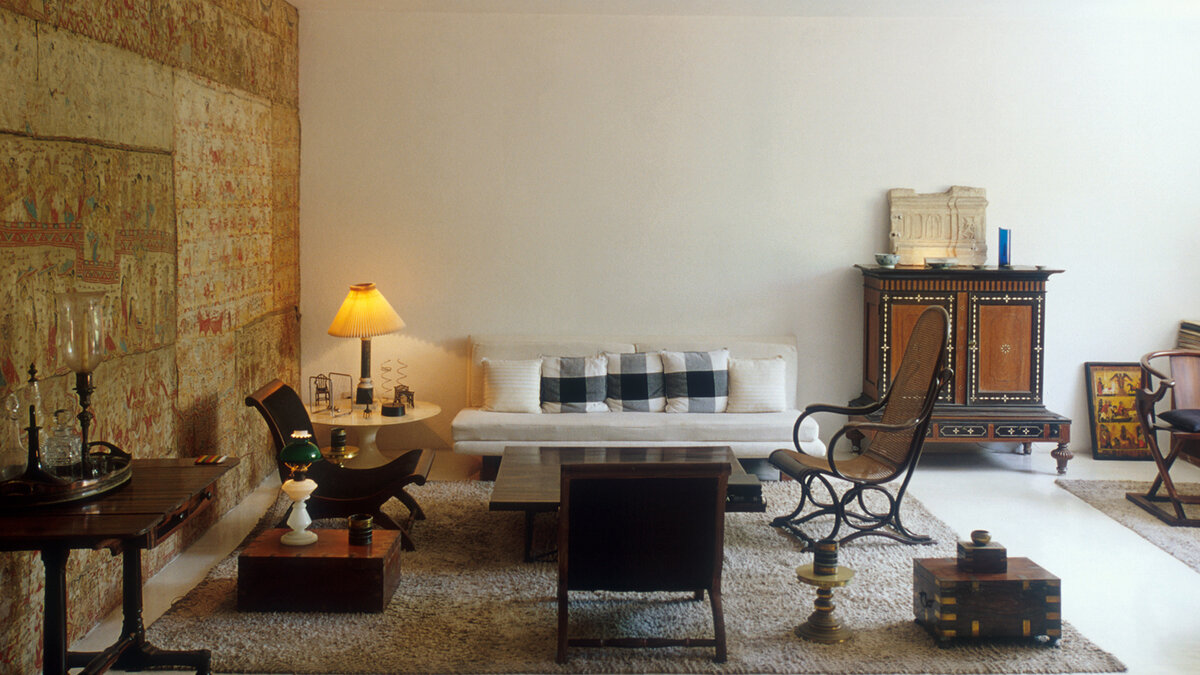
To Rao, the designs also didn’t feel fully resolved. What she didn’t realise at the time, but came to deeply appreciate later, was that all the pieces she had seen were, in essence, the physical embodiment of a rapid first sketch. Bawa’s furniture was usually designed under substantial time and resource constraints, using his own frame as the reference model. Often, the designs were the work of a few spontaneous hours. “To have that kind of clarity and intention show through in a chair made in a single afternoon is remarkable,” Rao says.
All of this reflected in Bawa’s own description of his furniture work as “what we thought best in the moment.” But Rao wondered if the designs would hold up outside that moment. “I began asking myself—was this chair, was this furniture actually ‘good’? Would it endure outside Bawa’s world, stripped of its context? Could these pieces stand as design icons alongside their contemporaries on a global stage?”
Searching for Bawa
The search for answers to these pressing questions drove Phantom Hands’ decision to more thoroughly examine Bawa’s ethos of making. Aside from the pressure of recreating a celebrated designer’s work, they were also negotiating the responsibility of representation. Phantom Hands’ interest in Bawa’s furniture stemmed from a broader mission to take a deeper plunge into mid-century modern South Asian design. Not only was this an attempt to look beyond India in its engagement with the region’s relationship with modernity, but also an endeavour to highlight modern South Asian design, typically sidelined in global design histories.
But the six prototypes, Rao felt, raised more questions than they answered. “I didn’t think they were the right vehicle for upholding Bawa’s legacy” she said. “It was as if he was just not present in them, not even in spirit,” she recalls.
It was to address this sense of deep disquiet that Rao and Srinath returned to Sri Lanka. This time, they chose to stay in one of Bawa’s most celebrated buildings—the Kandalama Hotel (now the Heritance Kandalama).
From Six Pieces to a Collection
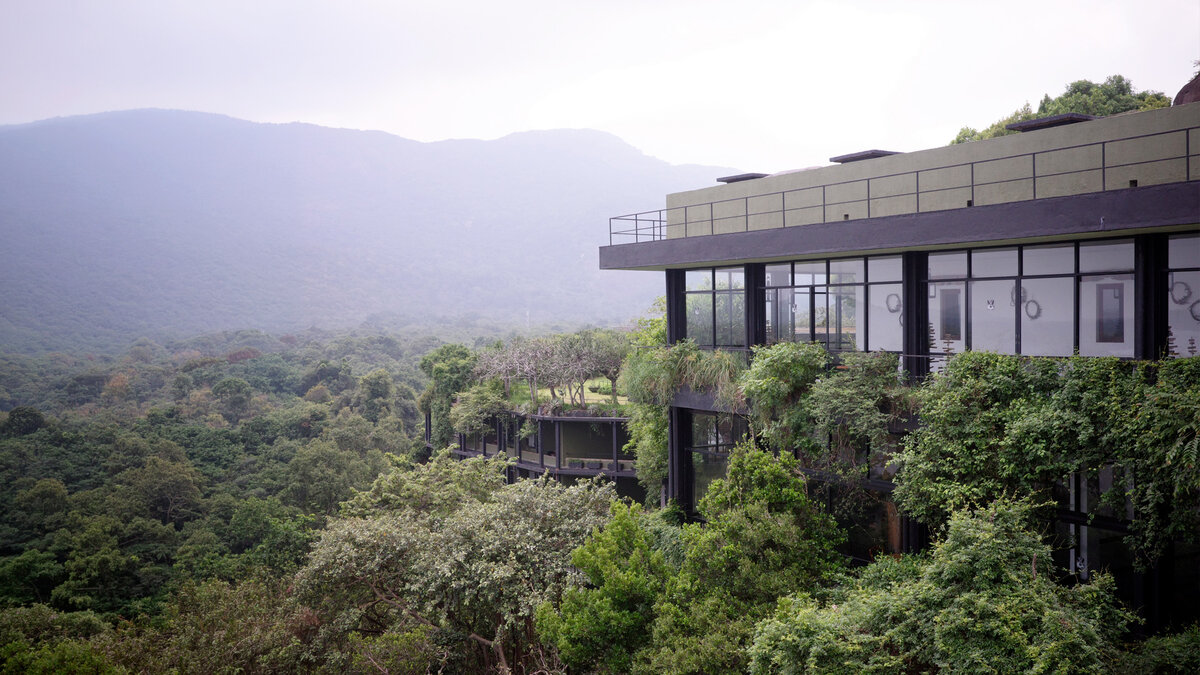
Located amidst the breathtaking landscapes of Dambulla, two and a half hours from Colombo, the Kandalama Hotel sits between a man-made lake and an ancient forest. Built in 1994, the hotel was designed to blend in with its surroundings. From the outside it appears an extension of the lush green landscape. Inside, guests are immersed in sweeping views of the Sigiriya rock fortress.
Bawa designed the hotel in his seventies and, despite his age, insisted on weekly visits to the site. It was gruelling, Daswatte admitted. “But Geoffrey was happy to do it because that is what he thought architecture was about, hard work.” But these visits weren’t just about supervising the work. They were also an exercise in learning about the site—its vegetation, its light, the views it offered. That attentiveness is evident in the furniture Bawa designed for the hotel.
Through Bawa’s Eyes
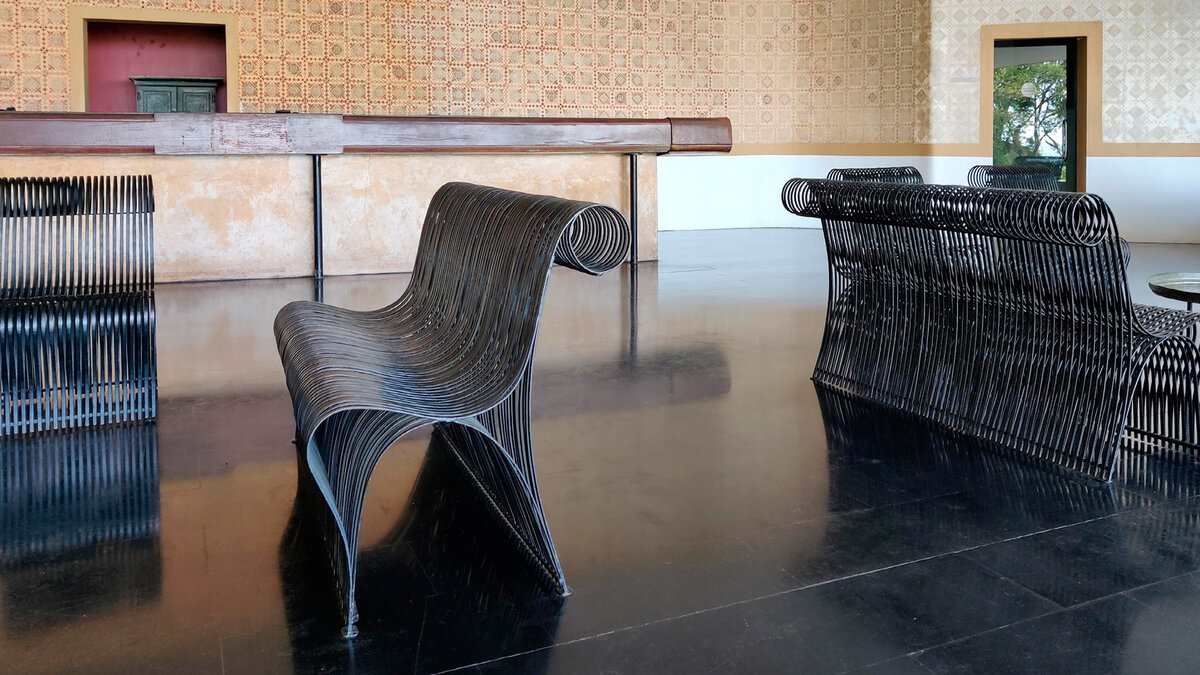
“Living at the hotel was a lesson in Bawa’s vision.” Rao says. Aside from being introduced to Bawa’s way of looking at the world, here, she and Srinath came across pieces they hadn’t encountered before. Among them were the triangular standing ashtray, created specifically for guests seated at the dining table; and a bench located on a picturesque balcony at the hotel. At first sight, the bench’s eccentric proportions struck Rao as strange, but a closer study revealed its intent. This was a single seat for the whole family. They could sit on all four sides, take in the view, perch on it at different levels, and still be able to make eye contact and conversation with each other. Suddenly, from a very odd bench, Rao now understood it as a beautiful and significant object.
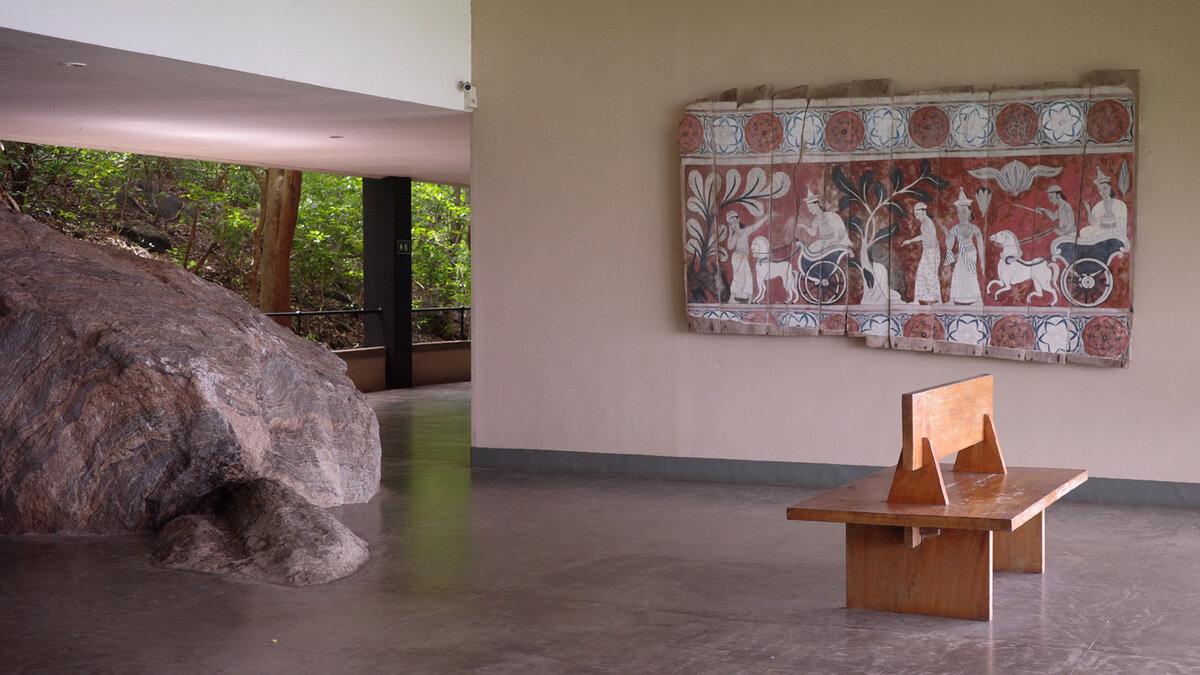
“It was there that I had an epiphany—there was so much more the pieces than met the eye!” Rao recalls. “I began to see the lines of thought move from the ideas of location, building, construction, and walls and floors, into the furniture that infused them with a new logic for existence.”
Electrified by the discovery, Rao began looking beyond the obvious pieces to the others, and in doing so, started to see the patterns emerge. The pieces were assembled, found, constructed out of what might be considered ‘waste’. Some were the souvenirs of anecdotes or relationships; some, designed for a single person. There was a dazzling plurality at the heart of Bawa’s practice that spanned environment, material, craftsmanship, social welfare, and cultural and relational awareness.
Seen through this lens, each piece acquired a unique subjectivity. “It was almost like an urgency that transformed the circumstantial frugality and deprivation—of time, resources, craftsmanship—into things of utter beauty,” Rao says quietly. She had seen such transcendencies in art before, but never in design, and it led to her posing the questions that would change the course of Phantom Hands’ endeavour: “Why weren’t these pieces acknowledged as an authentic part of Bawa’s work? Why weren’t they considered contributions to the design history of this region?”
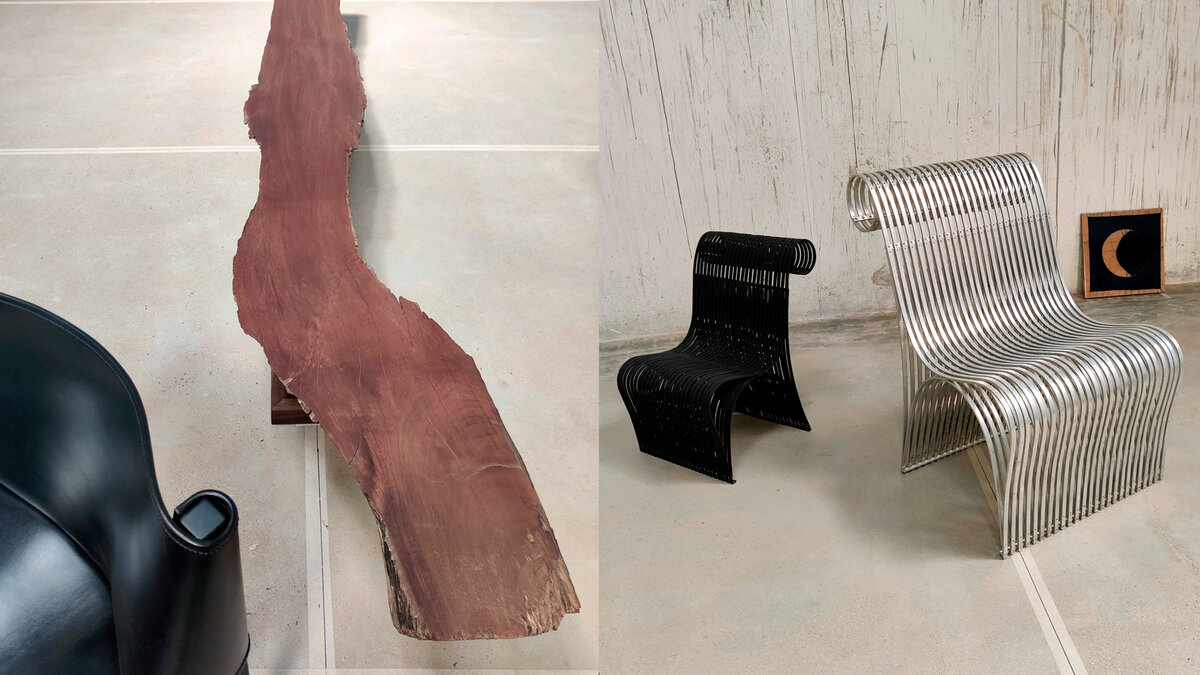
Rao realised that the original six pieces she and Srinath had chosen were too limited to showcase the depth of Bawa’s body of work. They would also not adequately convey the vast idea landscape, the web of constraints, or the context-specificity of his designs.
Phantom Hands then embarked on what could only be termed as a mission—to create a collection of pieces that embedded and embodied Bawa’s design ethos in its very bones. Nothing less, they realised, would do his capacious vision justice.
Bawa, Then and Now
The renewed plan hinged on a simple question: How would Bawa have developed his furniture if he’d had resources, time and access to modern technology?
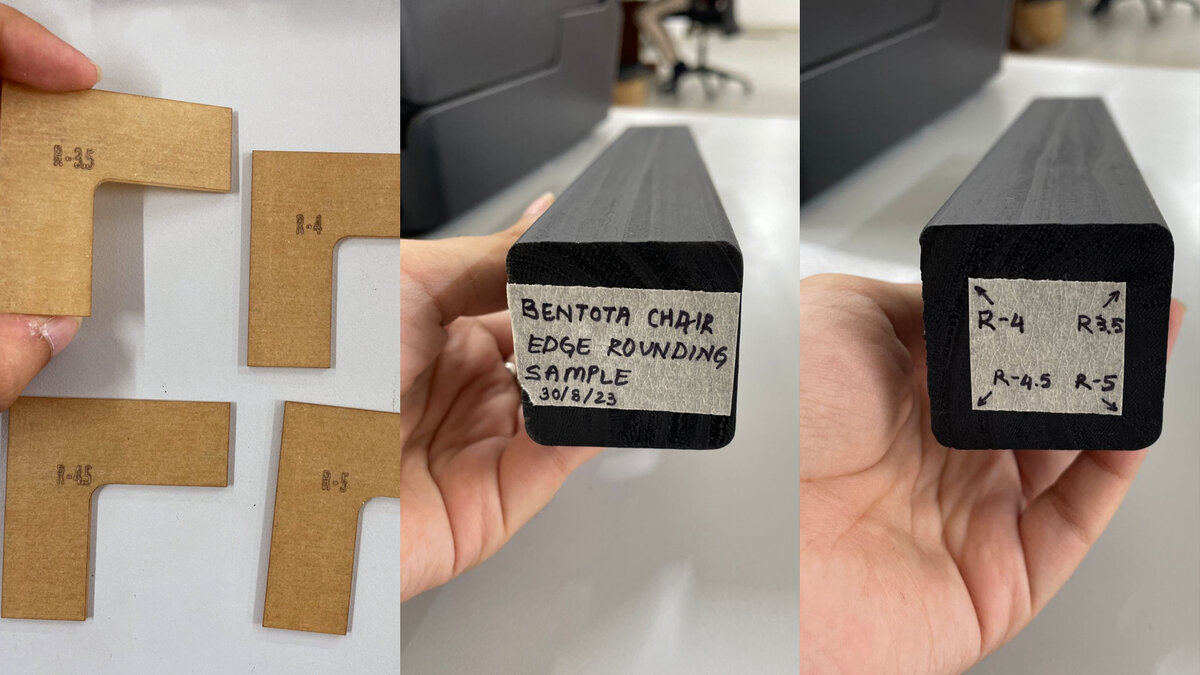
The query led Rao to cast cosmetic authenticity aside, and shift her focus to a deeper fidelity to Bawa’s design ethos. The goal became to discover the best possible version of each piece—just as Bawa might have. Freeing though that shift was, it also led to a kind of free-fall through a tunnel of decisions about details. If the sofa cushion could change, what shape should it take? Should the edges be rounded or sharp? Should the trim be piped or beaded? What was its width, its finish? What would these nuances add or take away semantically?
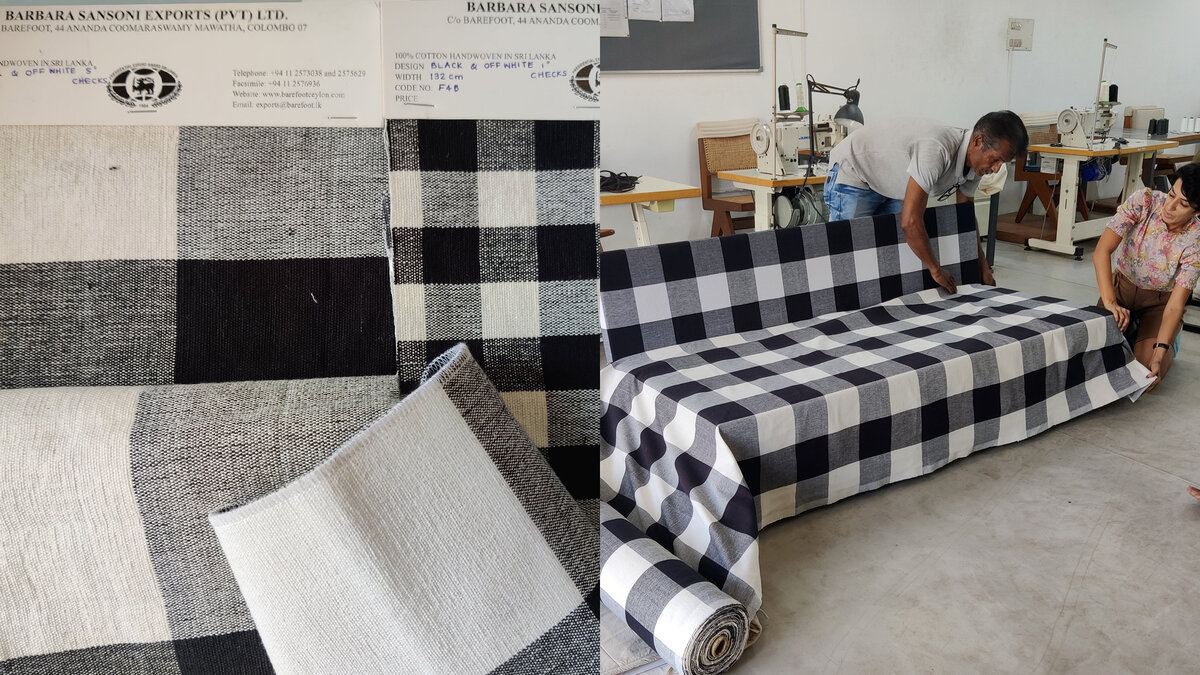
There were significant elements of the original that needed honouring, such as the sofa upholstery. Sourced from Barefoot, a craft textile foundation by Bawa’s longtime friend and collaborator Barbara Sansoni, these were made locally, by local craftspeople—a tradition closely aligned with Phantom Hands’ own practices. But the new fabric Barefoot offered the workshop in 2024 was brighter and shinier, altogether a far cry from the well-aged one seen at Bawa’s Number 11 home, in Colombo. It was also designed for garments, not upholstery.
To achieve the classic weathered look Rao recognised as ‘Bawa’, and to ensure the final piece of furniture remained timeless and sustainable, the Phantom Hands team made two key interventions. First, they requested Barefoot to make an unbleached version of the checked cloth. In this iteration the white checks looked softer and more muted, closer to the patinated fabric on the sofa at Number 11. Second, they had the fabric processed in a textile lab where a backing fabric was added, and the surface softened. This made it sturdier and more suitable for being used as upholstery.
100% Improvement
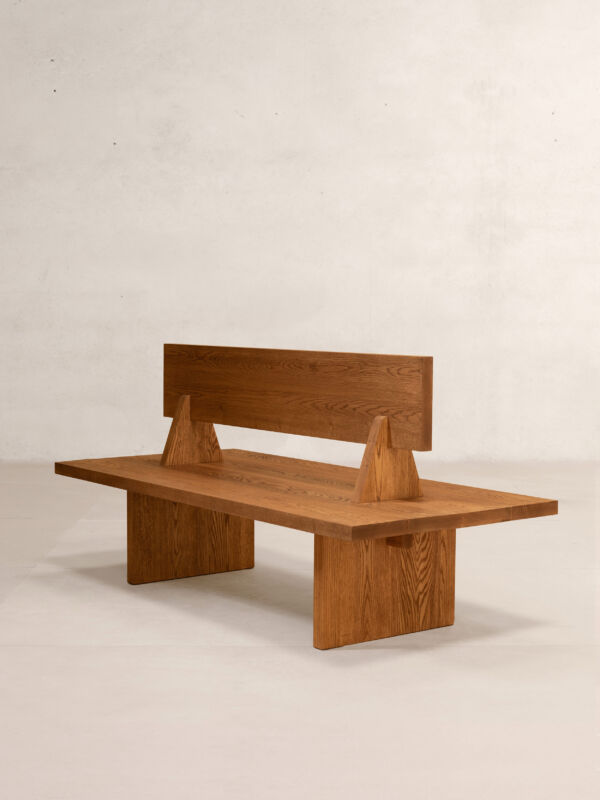
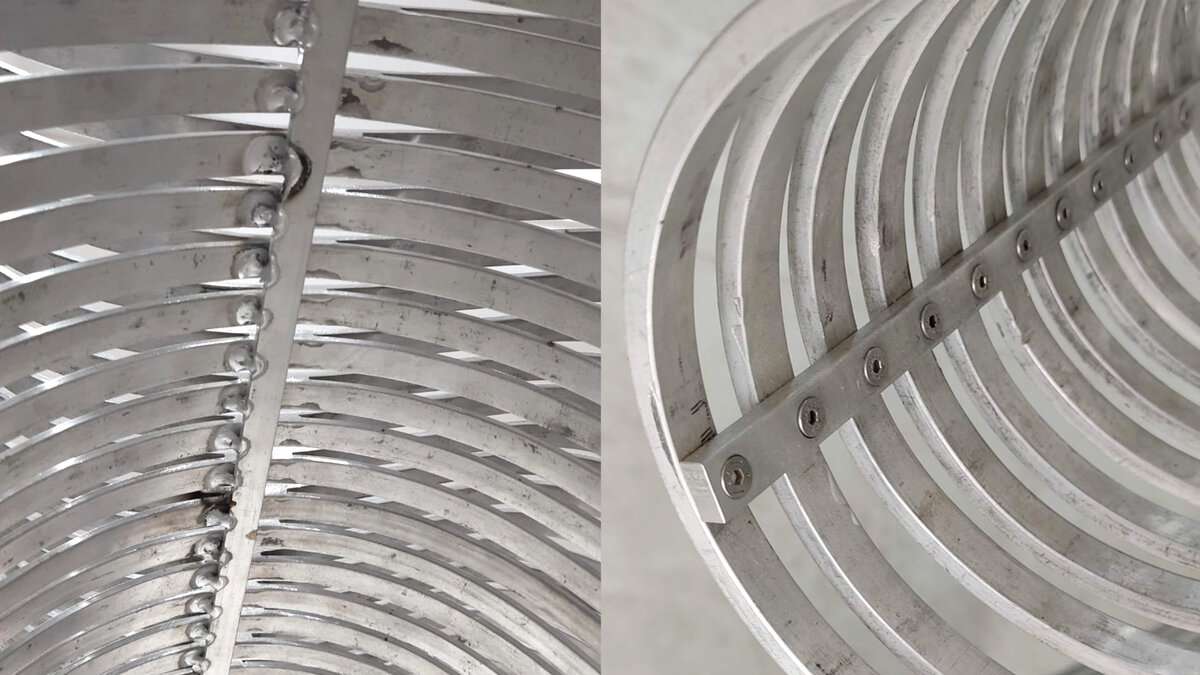
Other materials also evolved through the re-edition process. The Kandalama chair, originally made in iron, was reimagined in aluminium, allowing for greater precision and a lighter structure and feasible transportation. The leather for the saddle chair was upgraded to a thicker, more luxurious version sourced from J & R Guram, celebrated campaign furniture makers based in New Delhi, India.
These changes were not just arguments over form or design intent. The world Phantom Hands was building in was vastly, almost unrecognizably different from Bawa’s mid-century Sri Lanka. Materials that Bawa could once source locally had vanished into scarcity, or in some cases, into the protection of environmental law. Ebony wood, for instance, widely used in Bawa’s time, is now protected. In design, the geography of production is as central to material decisions as the history of its making, so when Phantom Hands began work on this collection, the questions were transplanted into new soil.
“I had a map where I marked the improvements we made over Bawa’s originals in terms of fabrication finesse—10%, 20%, even 100%. Once I had a few versions, I’d always turn to Channa and ask which one to go with,” Rao says. “He always chose the 100%”
A Line Drawn Forward
When Daswatte stood in that Bangalore studio surrounded by a reassembled history of Geoffrey Bawa’s furniture, what moved him wasn’t just nostalgia. It was recognition. Across decades and commissions, the pieces spoke to one another—not in sameness, but in sensibility. Together they told a story that is unique and inimitable.
What started with six cautious recreations grew into a deeper inquiry, not just about furniture, but about context, process, and legacy. These insights shaped every decision that went into creating Phantom Hands’ Geoffrey Bawa Collection. Throughout, the goal wasn’t to freeze Bawa’s furniture in time, but to let it live—just as it might have, had he been designing now.
What Daswatte saw in that workshop wasn’t a museum of artifacts—it was a living archive of pieces, some of which he had drawn, debated, and laboured over alongside Bawa himself. To see them there was an emotional moment that collapsed time. The items presented carried the past forward with care and curiosity. It was this care that ultimately convinced the trustees that this wasn’t a retrospective, but a continuation. A line drawn forward.