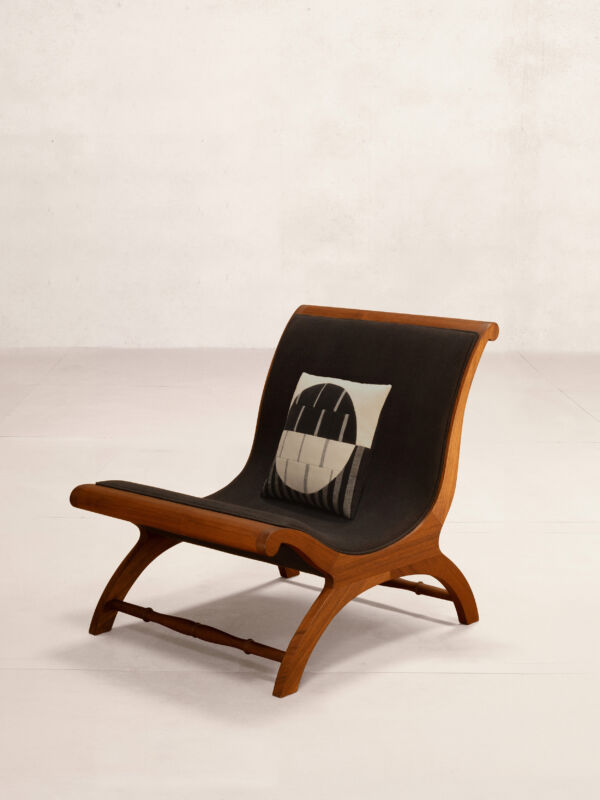
Opening Lines: In Geoffrey Bawa’s Design Process, Drawing Was a Starting Point to Spark Dialogue
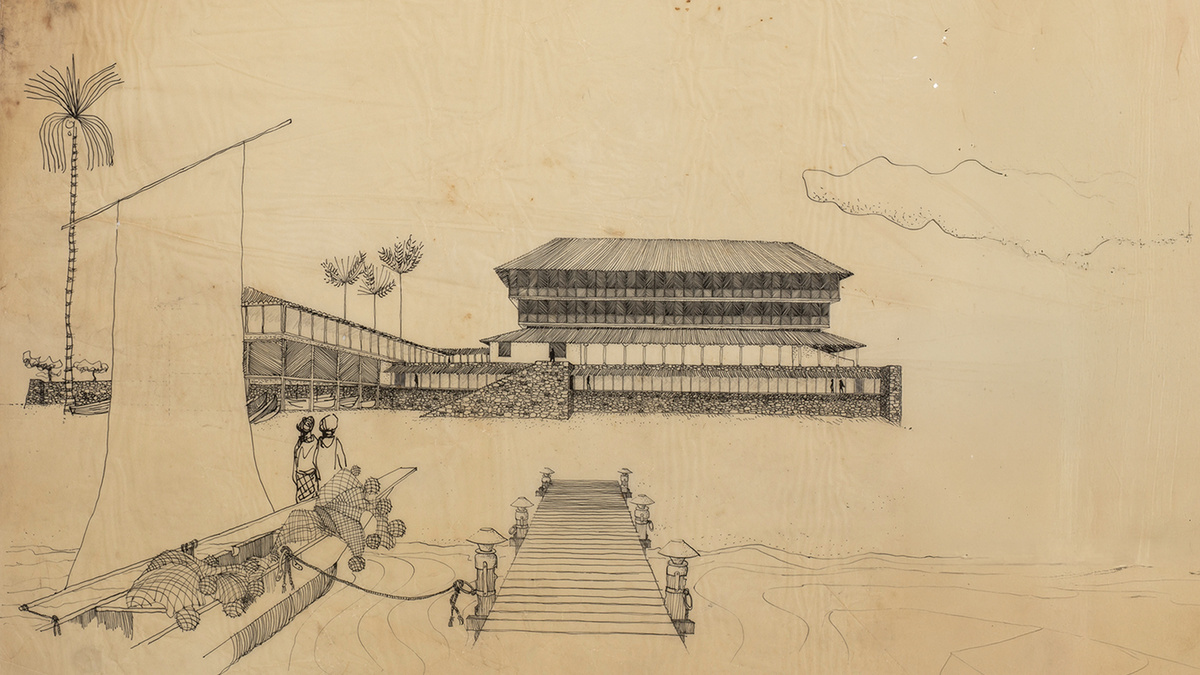
Bentota Beach Hotel, perspectival drawing, ink on tracing paper. (Image © Geoffrey Bawa and Lunuganga Trusts)
Parni Ray
25.06.2026
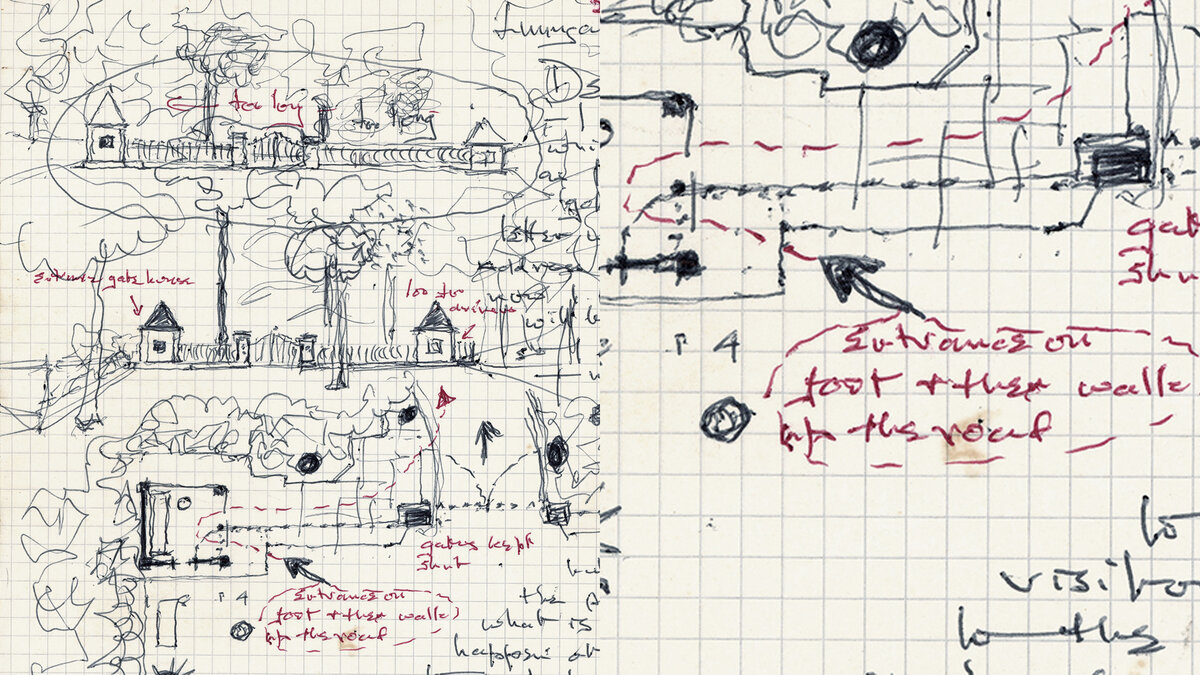
For Geoffrey Bawa, drawing was a way of thinking—a starting point for a dialogue with ideas, objects, site and material. In his practice, ideas for buildings, furniture and objects alike, developed through scribbled sketches—in letters, on tracing paper, and even on some occasions, on the ground, using his walking stick.
The Many Lives of No. 11
“And that there,” said the guide, pointing to an ornate door, “leads to what used to be the private chambers of Mr. Bawa.” We were standing next to a patch of green in the middle of Geoffrey Bawa’s former home in Colombo. The sun poured down through the pergola above us, water trickled into a tiny stone-filled pond. Birds sang. The air was thick with the fragrance of frangipani.
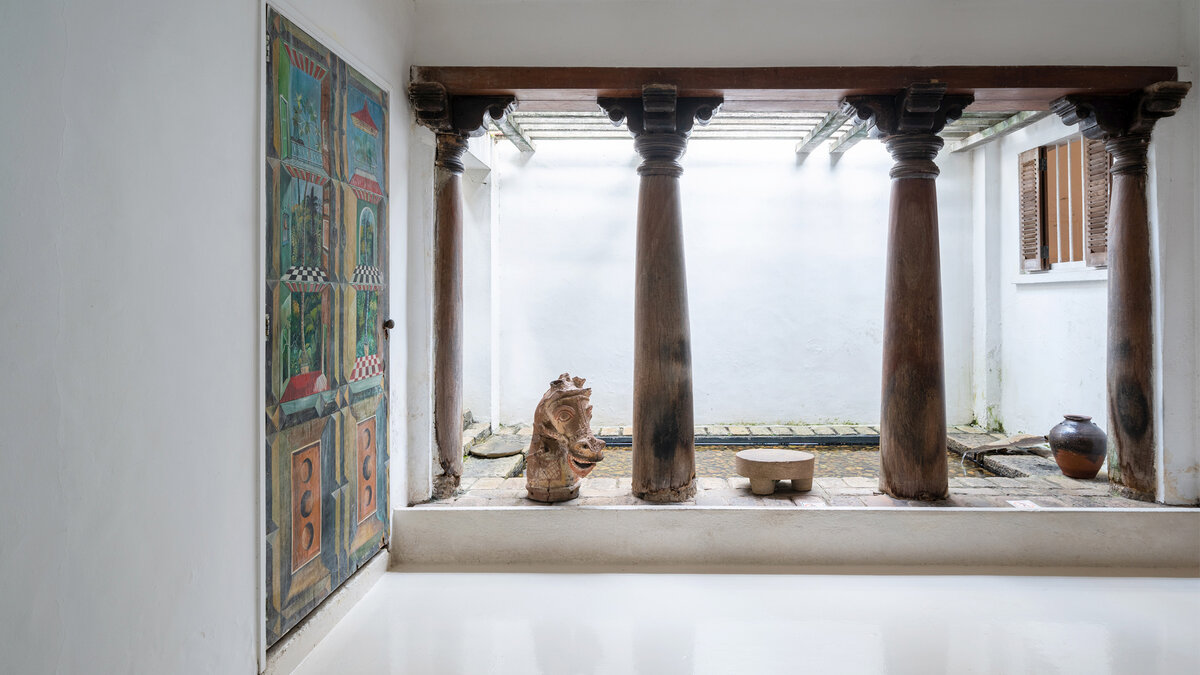
(Image © Geoffrey Bawa and Lunuganga Trusts)
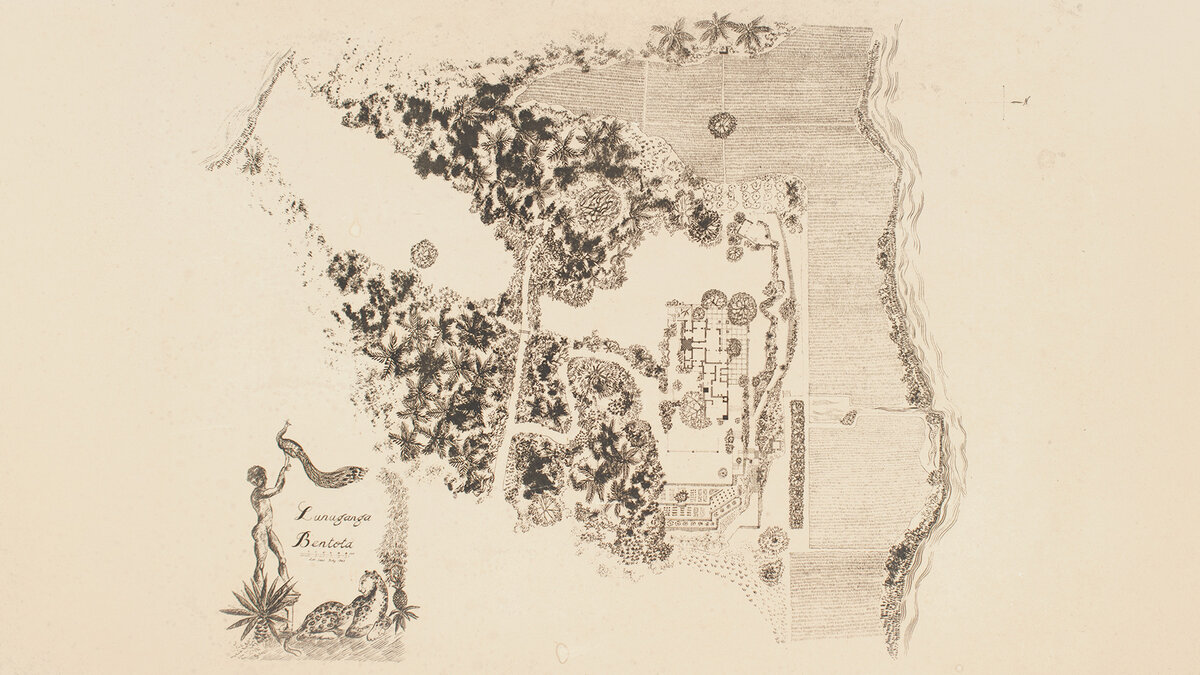
The guide held up a drawing of the house to explain how it flowed. Besides the doors, windows, and corridors, the floor plan showed the trees and plants and bushes on the premises in great detail. It seemed unusual, but how else could you render this space, with its foliage and water bodies woven so deeply into the design?
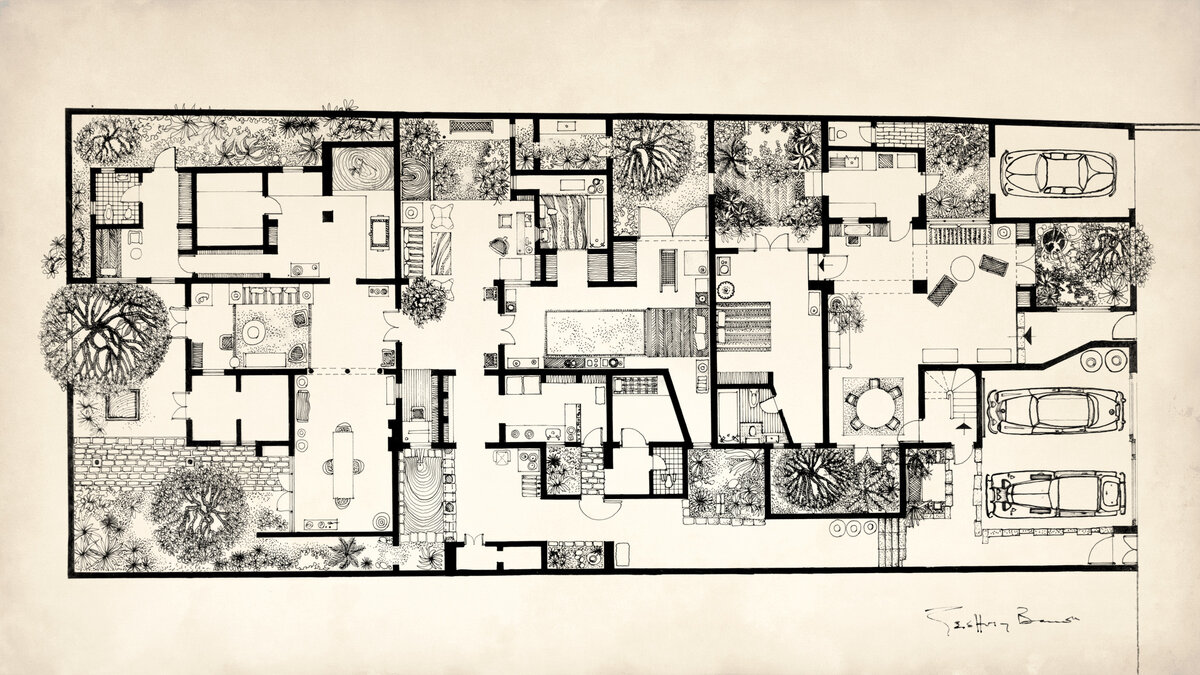
The story of this home began in 1959, when Bawa, newly returned from the UK as a fully qualified architect, started work at the Colombo-based architecture firm, Edwards, Reid and Begg (ERB). He rented the third in a set of four row houses and eventually bought it. Then the one next to it. Then the one beside that. Within a decade, he had acquired all four adjoining houses on the street and merged them into a single, continuous home. This brooding maze of interconnected spaces became known to those who frequented it simply by its address—No. 11.
No. 11 became the nucleus of Bawa’s social life in Colombo. Not only was it a place to entertain friends, it was also where Bawa kept his extensive collection of art, artefacts, trinkets and furniture, both old and new.
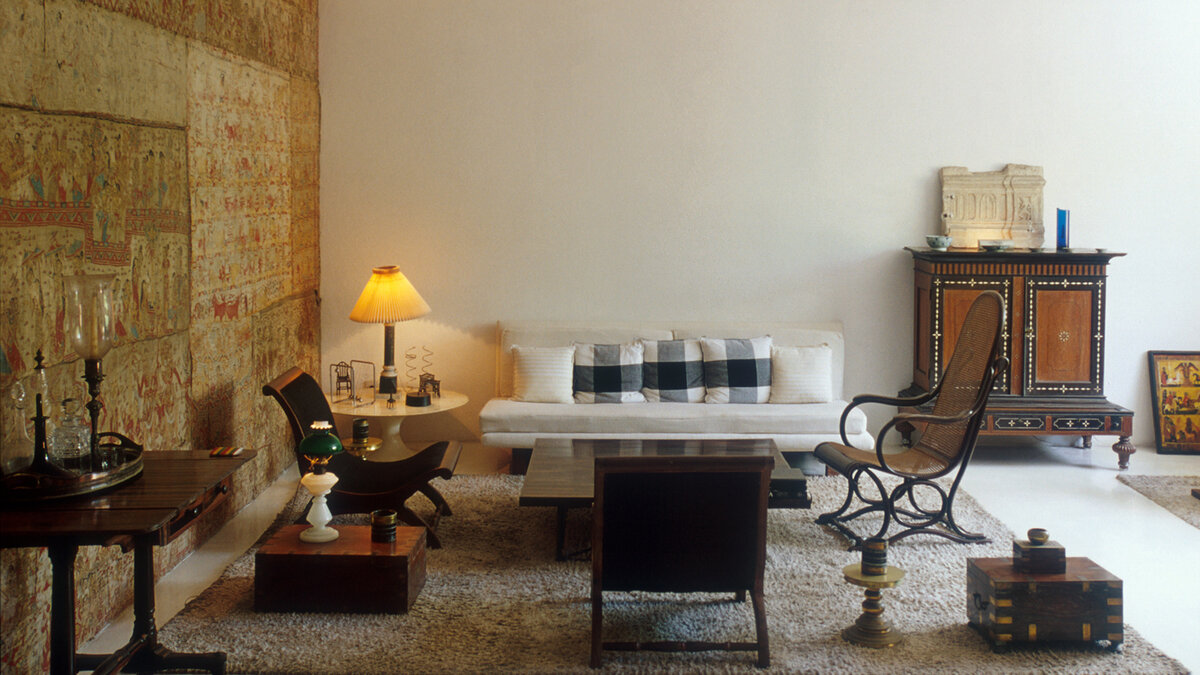
Later in the 1980s, when Bawa retired from ERB, No. 11 also became his office.
The office setup was basic, Channa Daswatte, the last partner of Geoffrey Bawa's architecture practice, tells me. A core group of 3–4 worked on projects, while a stream of young interns from all over the world trickled in and out. “Geoffrey sat at a round table in a corner, while the other motley collection sat with their drawing boards at various other tables” Daswatte says. “There was no hierarchy as such, but there was no confusion about who the boss was.”
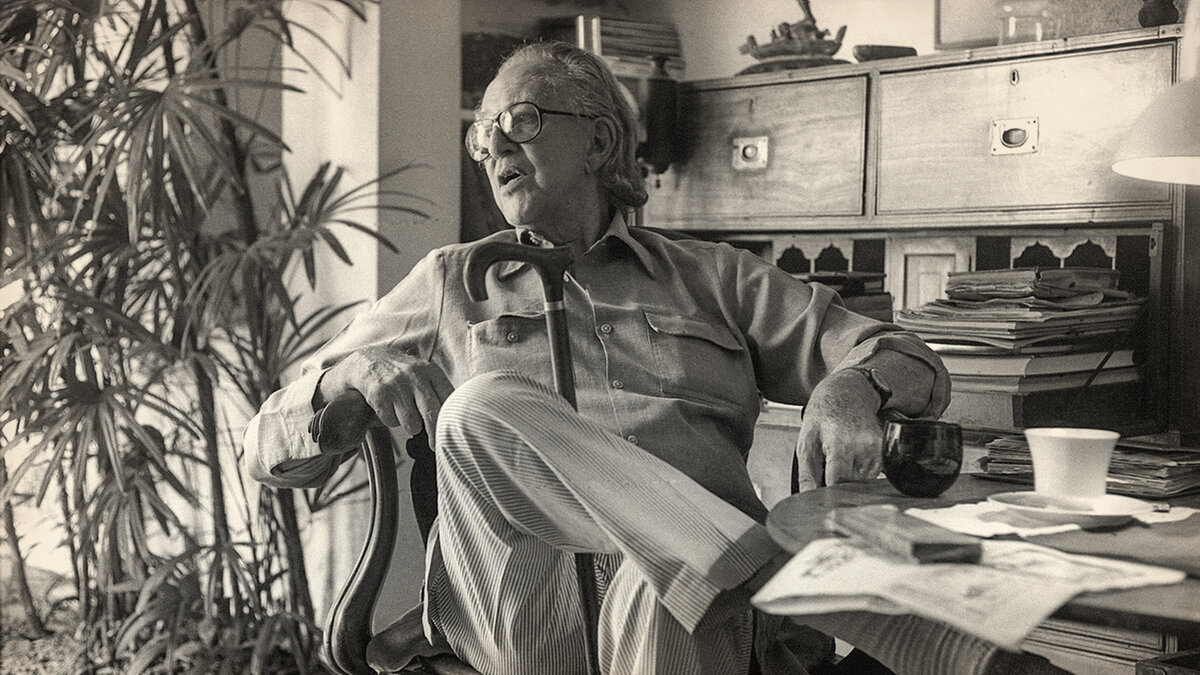
(Image courtesy: Dominic Sansoni/ThreeBlindMen)
By this time, Bawa was in his 70s. His architectural approach was already famous for being rooted in sensory experience. He often spent hours, days, sometimes even months surveying a site. His work focused on amplifying the places his projects were located in, often by integrating the local trees, boulders, watercourses, light, and views.
(Image © Geoffrey Bawa and Lunuganga Trusts)
Sketch. Tweak. Test. Build: Inside Bawa’s Design Process
In all that Bawa did, drawing proved an important way of thinking through ideas. On site, he often scrawled his ideas out on the dirt. He loved the sketching stage, but not the technical drawing stage. For that, he had people in his office. At Edwards, Reid and Begg, he relied on Laki Senanayake (his trusted draughtsman and longtime artistic collaborator), Anura Ratnavibhushana, Pheroze Choksy, and Ismeth Raheem to translate his miniscule sketches. “We were the ‘The Set Square and T-square Set’” Raheem wrote in a piece for the Sunday Times. “All our work was drafted on wooden drawing boards almost five to six feet long and three feet wide. The drawings were drafted on tracing paper with special pencils and if Bawa had to impress a client the original drawings were inked, and printed.”
(Image © Geoffrey Bawa and Lunuganga Trusts)
The Bawa Way
Bawa’s brilliance lay in the process—not just in what he built, but in how he built it: collaboratively, through improvisation, and always rooted in local materials and skill.
While designing the Heritance Hotel in Ahungalla, LA-based architect Gerhard W. Mayer—then an intern at the firm—recalled being told that Bawa had travelled to Burma to purchase teak. A few weeks later, thick slabs of the wood arrived directly at the construction site. “There were few power tools on the site, and I went back to the office and immediately proceeded to detail the hotel with my central European knowledge, and central European materials,” Mayer writes. When they returned to the site he found the local teams had already made windows, doors, balustrades and furniture out of the teak slabs, with hand tools. “Your details would not last a season here in our climate,” Bawa laughingly told Mayer. “We have traditional methods that will.”
Improvisation was key to Bawa’s method. Working under both time and resource constraints, he was known to rely on instinct. He once said, “We (he and his collaborators) did what was thought to be right at that moment” design-wise.
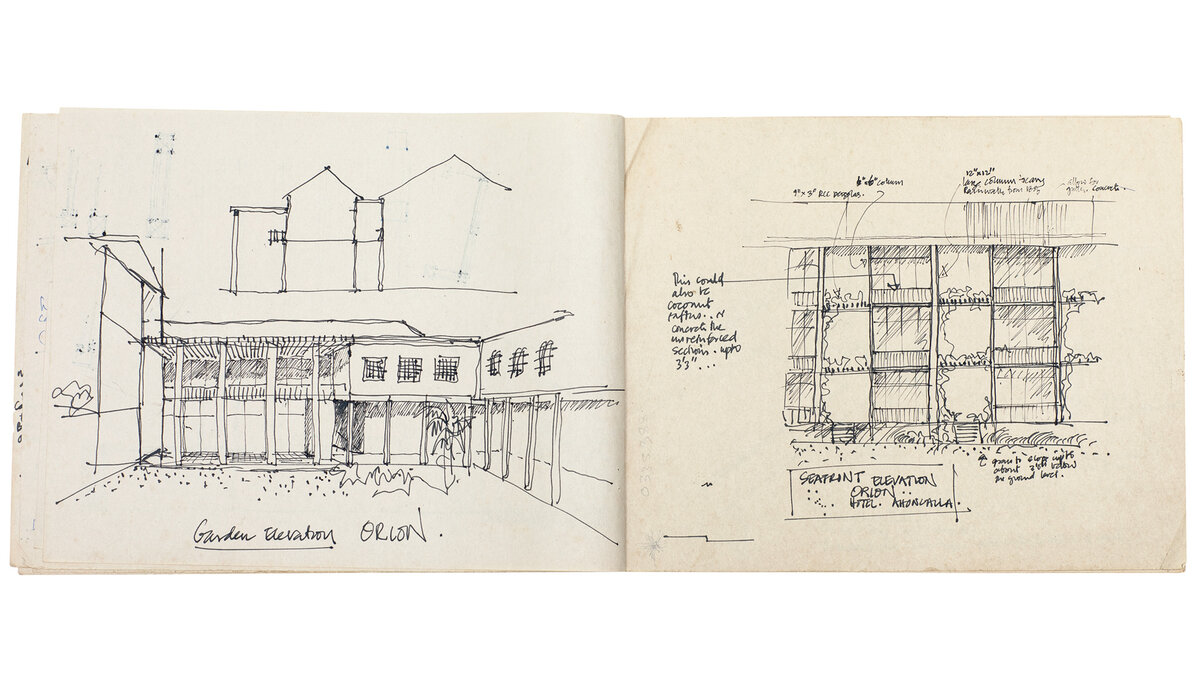
(Image © Geoffrey Bawa and Lunuganga Trusts)
From Idea to Object
Daswatte remembers the translation from thought to drawing to object, being a frenzied process. “For the café chair, for instance, he told me ‘Channa go and get that chair (an antique Thonet café chair in his collection). Now lay it on the side on this blueprint paper and trace it’”. Standing up and with his signature walking stick Bawa, would then walk around the chair on the paper, pointing out on the drawing the changes he wanted. “‘Curve this bit here’, he would say, ‘curve that’”, Daswatte recalls.
The tweaks were made, always mindful of what could not be changed and what could. A basic drawing emerged from these adjustments, then a full-scale drawing with measurements. This then went to the craftsman. “So for the (Kandalama) cafe chair, I remember Geoffrey asking me to get two pieces of bent metal. We placed them side by side and then we tied some sticks on them. ‘Go sit on it’ he said then.” As the experiments continued, workable prototypes emerged, fresh drawings were made, and the craftsman called back. “We teetered between the aesthetic bit and the practical bit until everyone was happy,” Daswatte says.
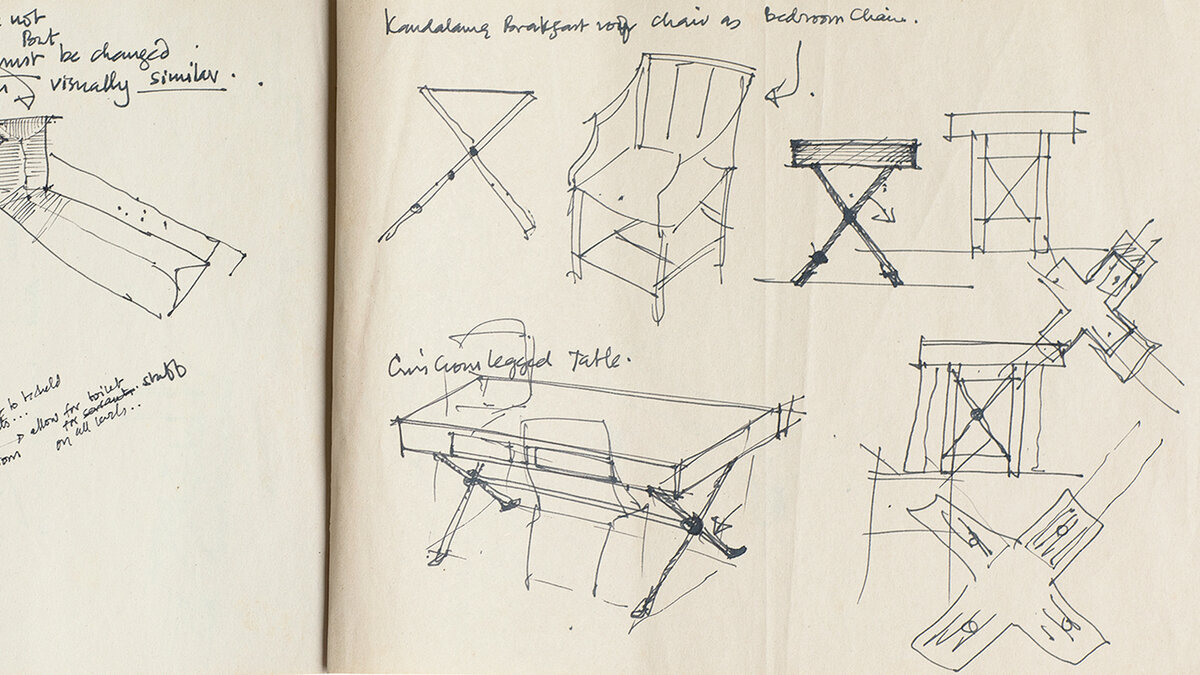
(Image © Geoffrey Bawa and Lunuganga Trusts)
But while on-the-spot innovation was key, it existed alongside drawing. The drawings didn’t just initiate Bawa’s design process, they were deeply embedded within it. Most crucially, they helped translate his ideas into tangible form.
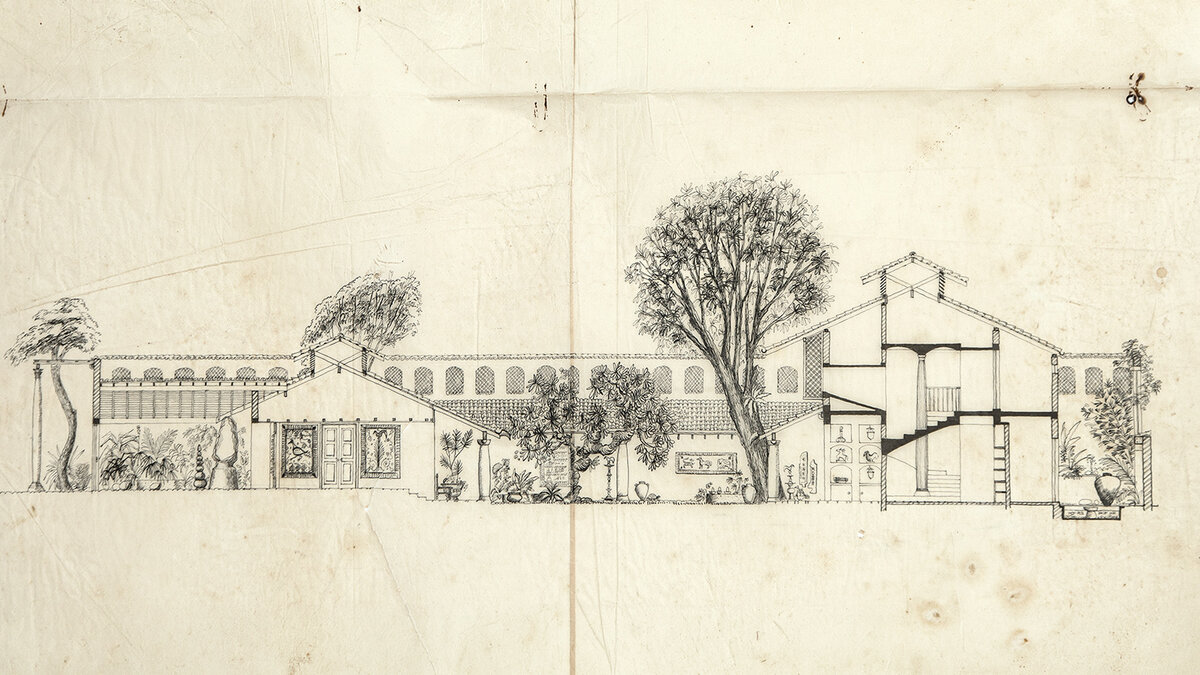
(Image © Geoffrey Bawa and Lunuganga Trusts)
Design in the Moment: The Rediscovery of Bawa’s Furniture
Sadly, almost none of the original drawings of the furniture Bawa designed have survived.
In the mid-2000s, the Geoffrey Bawa Trust began documenting his furniture collection—a process that, fittingly, started with drawing. The team began by recording Bawa’s colonial-era furniture, then moved on to the contemporary pieces. “As we started documenting them,” Daswatte says, “we realised that, aside from a few original items, almost everything else in his collection had been designed and made by Geoffrey himself.” Nearly a hundred such pieces were eventually recorded.
Most of these were created for specific projects—the Bentota Beach Hotel, the Kandalama Hotel—and were rarely, if ever, repeated elsewhere. For decades, many of them remained in their original locations. A few select samples (“the best ones,” as Daswatte put it) found their way into Bawa’s own homes. But never, not even during Bawa’s lifetime, had all of the designer’s furniture been gathered in one place.
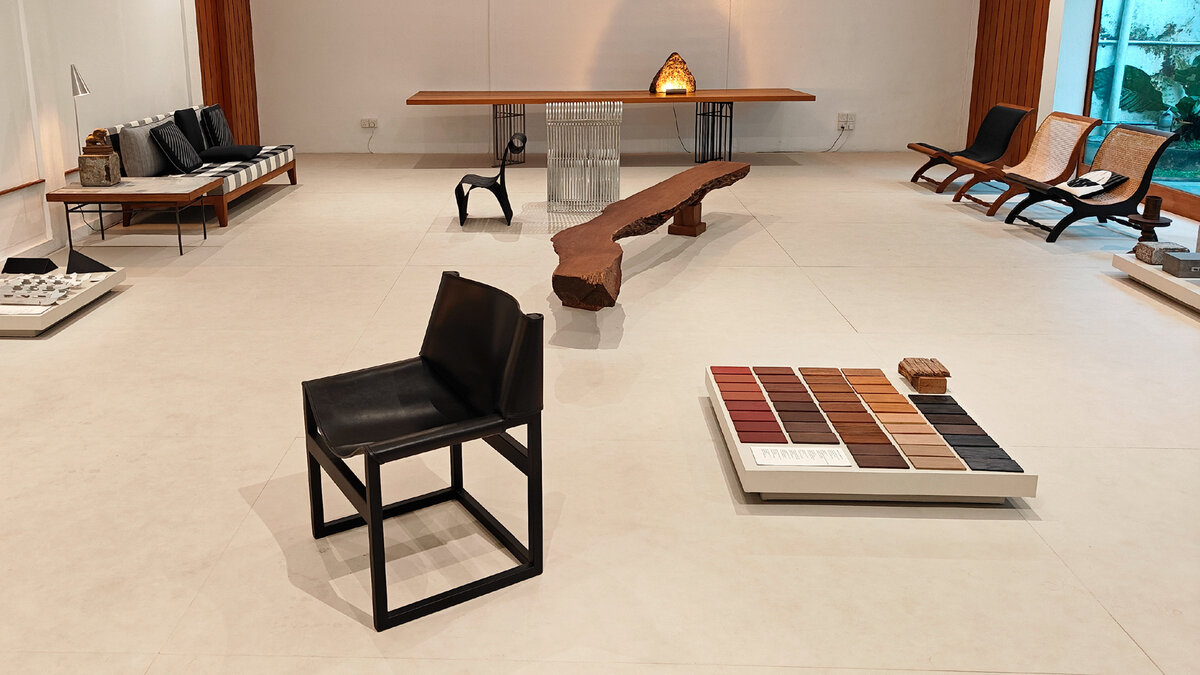
That changed in December 2024, when 22 pieces of Bawa’s designs were recreated by Phantom Hands and exhibited in Colombo at a show co-created and curated by the Geoffrey Bawa Trust and Phantom Hands. Aptly, it was titled ‘Design in the Moment.’ “It was the first time I saw all the furniture together,” Daswatte said, adding, “And seeing those pieces side by side, I saw how they were in conversation with each other.”
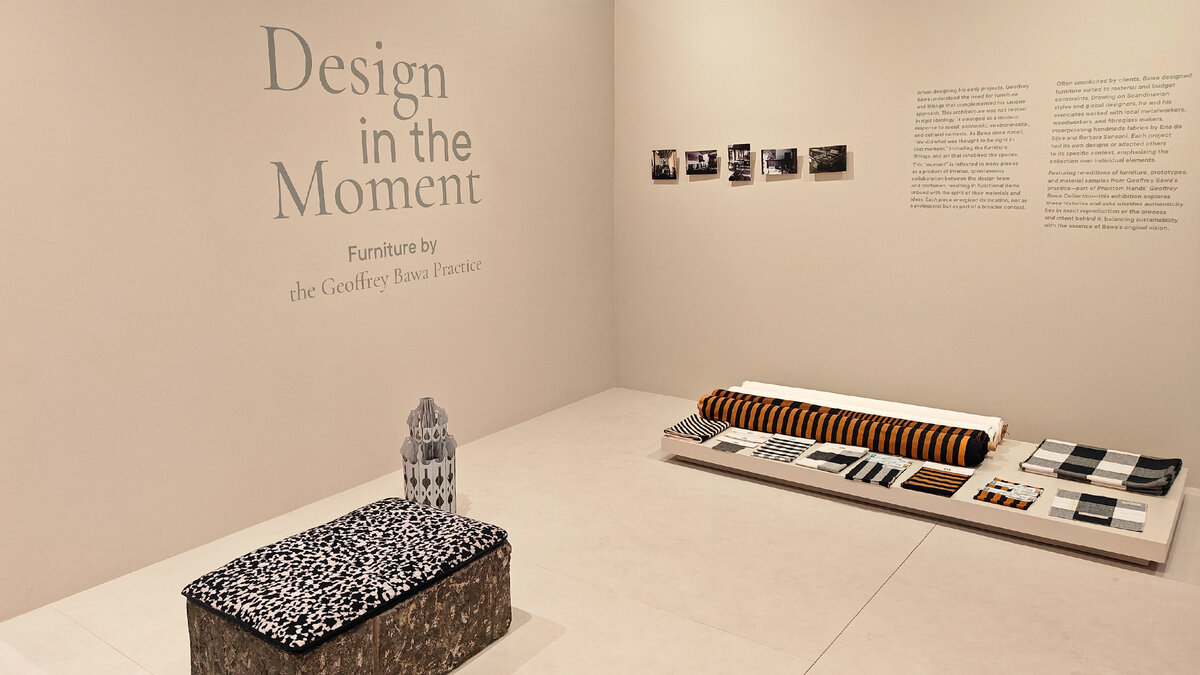
(Image by Phantom Hands)
Design in the Moment did more than just assemble objects. It revealed the conversations that underpinned Bawa’s process. Each piece on display was a record of ongoing dialogue—between architect and craftsman, past and present, idea and material. In this context, the drawings were never just preliminary sketches—they were the beginning of a conversation, a way for Bawa to test an instinct, explain an idea, and invite others in.
(Image by Phantom Hands)
“Even if I get 80 per cent of what is in my head, then I will consider myself successful,” Bawa is known to have once said. It’s a telling measure—not of control, but of translation. Because for him, design was never static. It was always moving, always becoming. And drawing, always, was how it began.